
 EN
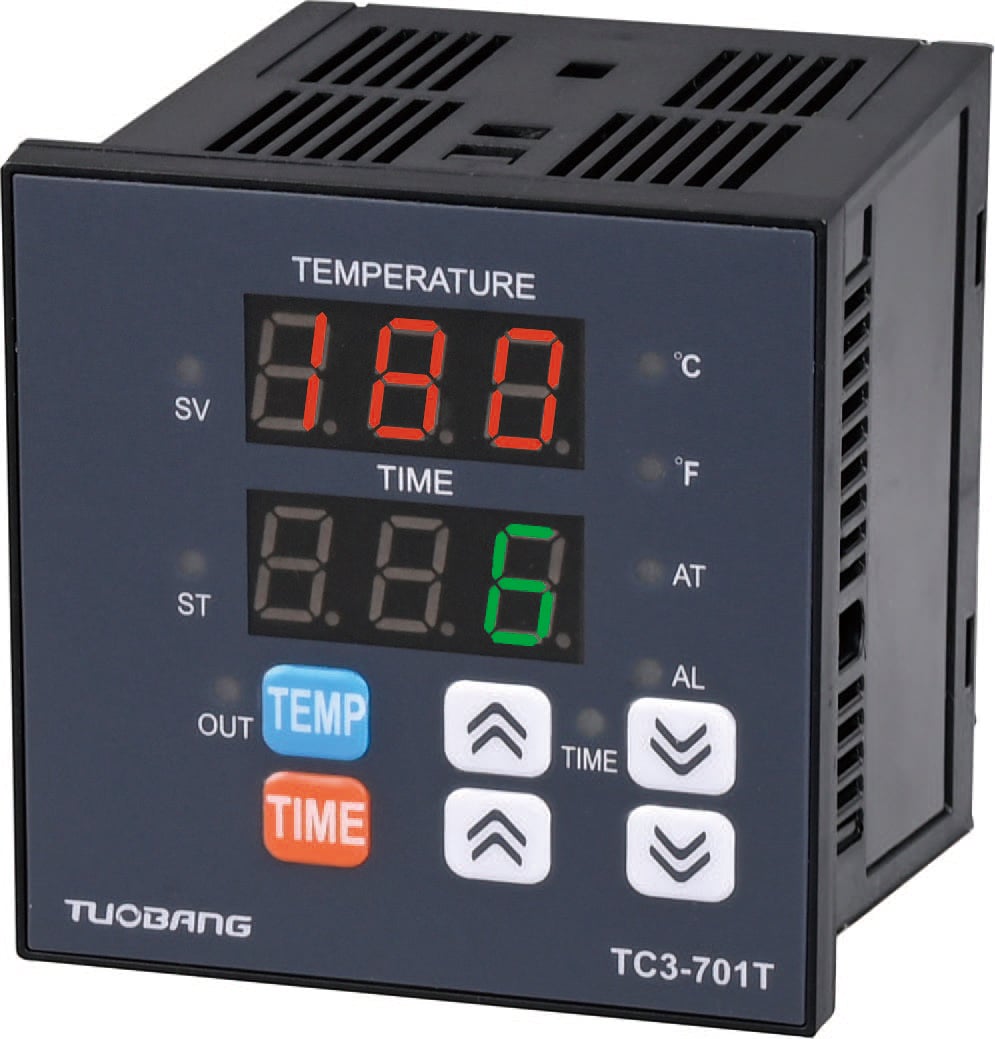
Vapor Pressure Deficit and the Hidden Cost of Manual Venting
Walking into a polyhouse at seven in the morning to crank open side curtains by hand feels routine until an unexpected cloud bank rolls in or a noon heat spike catches the crew on lunch break. Plants do not respond to dry-bulb thermometer readings alone; their stomatal conductance and nutrient uptake are driven by Vapor Pressure Deficit, which measures the difference between the moisture inside a leaf and the drying power of the surrounding air. When a grower relies on standalone wall thermostats or manual switches, solar radiation heats the canopy faster than the air can hold moisture, forcing crops to shut their stomata and halting calcium transport to developing fruit.
Installing an automatic temperature and humidity controller bridges the gap between raw sensible heat and latent moisture load. According to the American Society of Agricultural and Biological Engineers standard ASABE EP406 for heating, ventilating, and cooling greenhouses, maintaining active crops within a Vapor Pressure Deficit window of 0.8 to 1.2 kilopascals is critical to prevent both transpiration lockup and fungal pathogen outbreaks. When evening temperatures drop rapidly after sunset, relative humidity inside a sealed plastic tunnel spikes toward saturation within thirty minutes. A dual-loop digital regulator anticipates that thermal plunge, cycling exhaust shutters and low-level pipe heat before liquid water droplets condense on leaf surfaces and invite Botrytis cinerea gray mold.
Coordinating Exhaust Fans, Evaporative Pads, and Heating Relays
Greenhouse climate actuators pull in opposite directions if they are not wired through a unified logic board. Turning on an evaporative wet-wall pad pump when outside relative humidity is already above 80 percent merely swamps the crop with muggy air without dropping canopy temperature. Inside a dual-channel panel controller, independent deadband settings and relay interlocks ensure that heating contactors, ridge vent gearmotors, circulation fans, and high-pressure fogging solenoids operate in a staged sequence rather than fighting each other.
| Climate Control Approach | Typical Canopy Thermal Swing | Relative Humidity Stability | Mechanical Actuator Wear | Crop Disease and Tip-Burn Risk |
|---|---|---|---|---|
| Manual Curtain Cranks and Basic Thermostats | Plus or minus 5.0 degrees Celsius during cloud transitions | Frequent overnight spikes above 90 percent RH | High starting torque stress from sudden full-stroke switching | Elevated Botrytis spore germination and calcium tip-burn |
| Staged Automatic Dual-Loop Controller | Plus or minus 0.8 degrees Celsius across solar shifts | Locked within 5 percent RH of target band | Smooth stepped staging with programmable delay timers | Minimal condensation window and steady transpiration flow |
When solar load builds mid-morning, an automatic temperature and humidity controller initiates first-stage passive ventilation by pulsing roof vent actuators open in incremental steps. If canopy heat keeps climbing past the primary proportional band, the unit engages horizontal airflow fans and multi-speed exhaust blowers before finally triggering the evaporative cooling pad solenoid. Conversely, during damp winter mornings, the controller runs a dehumidification purge cycle, cracking the ridge vents slightly while firing unit heaters to expand the incoming cold air and strip excess moisture out of the growing bay.
Stopping Powdery Mildew in a Multi-Span Hydroponic Strawberry Greenhouse
During a winter crop cycle at a four-hectare multi-span hydroponic strawberry facility in Eastern China, the agronomy team battled recurring powdery mildew and blossom abortion across twelve polycarbonate bays. The farm originally used separate mechanical capillary thermostats for the hot-water perimeter pipes and simple timer relays for the roof exhaust fans. Whenever a cold rainstorm hit in late afternoon, the roof vents slammed shut to hold heat, trapping transpiration moisture from forty thousand irrigated substrate bags. Within forty minutes, indoor relative humidity hit 94 percent, coating the plastic film and strawberry crowns in cold condensation that dripped all night.
The facility engineer retrofitted the main irrigation and climate cabinets with DIN-rail mounted digital dual-loop controllers tied to aspirated PT100 and capacitive polymer sensor shields hung directly at flower-truss height. By programming a five-percent humidity hysteresis band around a 72 percent RH ceiling and interlocking the hot-water mixing valves with a ten-minute minimum vent purge cycle, the automatic temperature and humidity controller eliminated the sunset moisture spike. Across the remaining four months of harvest, fungicide spray applications dropped by half, marketable first-grade berry yield rose by 18 percent, and fuel consumption on the boiler loop fell by 14 percent because the heaters no longer fought uncoordinated fan cycles.
Sensor Aspirated Shields, Condensation Creep, and Wiring Realities
Even a rugged industrial panel meter will feed bad commands to the relay bank if its field probe sits exposed to direct sunlight or pesticide overspray. A bare dark-plastic sensor housing hung above a plant bench absorbs radiant heat, reading three to five degrees higher than true air temperature at noon and tricking the cooling relays into over-ventilating the house. Under ISO 7726 guidelines for thermal environment instrumentation, radiation shielding and forced air movement across the sensing element are mandatory for accurate microclimate telemetry.
House combined temperature and humidity probes inside white solar radiation shields equipped with a continuous 24-volt micro-fan so the sensor measures moving canopy air rather than stagnant radiant heat.
Mount field probes at active crop height and winch them upward every two weeks as indeterminate vine crops like tomatoes or cucumbers grow toward the gutter wire.
Route RS485 sensor cables through liquid-tight non-metallic conduit away from high-voltage variable frequency drives running irrigation pumps and exhaust motors to block electromagnetic noise.
Slip replaceable sintered PTFE membrane caps over the capacitive humidity chip before sulfur burners or thermal fogging machines run, preventing chemical residue from blinding the polymer dielectric layer.
Growers also need to recognize the structural limits of a single-zone controller in long, naturally ventilated tunnels. In a 100-meter-long house with pad-and-fan cooling, air warms up by three to four degrees as it travels from the wet pad intake to the exhaust fan wall. One central automatic temperature and humidity controller cannot erase that longitudinal thermal gradient on its own; operators must supplement the main control loop with distributed horizontal airflow fans and zoned overhead misting valves to keep the far end of the house from drying out.
Building Weatherproof Control Panels for Harsh Agricultural Environments
Greenhouse electrical rooms are tough on instrumentation, combining high ambient moisture, fertilizer dust, and frequent inductive voltage spikes from heavy contactor coils. Selecting panel hardware engineered with conformal-coated circuit boards, flame-retardant enclosures, and isolated signal inputs prevents mid-winter control blackouts when a crop is most vulnerable. Suosite supports agricultural equipment builders and automated climate integrators with rigorously tested sensing modules, strict assembly quality control, and dependable supply chain fulfillment so commercial growers can hold stable microclimates season after season.
Table of Contents
- Vapor Pressure Deficit and the Hidden Cost of Manual Venting
- Coordinating Exhaust Fans, Evaporative Pads, and Heating Relays
- Stopping Powdery Mildew in a Multi-Span Hydroponic Strawberry Greenhouse
- Sensor Aspirated Shields, Condensation Creep, and Wiring Realities
- Building Weatherproof Control Panels for Harsh Agricultural Environments