
 EN
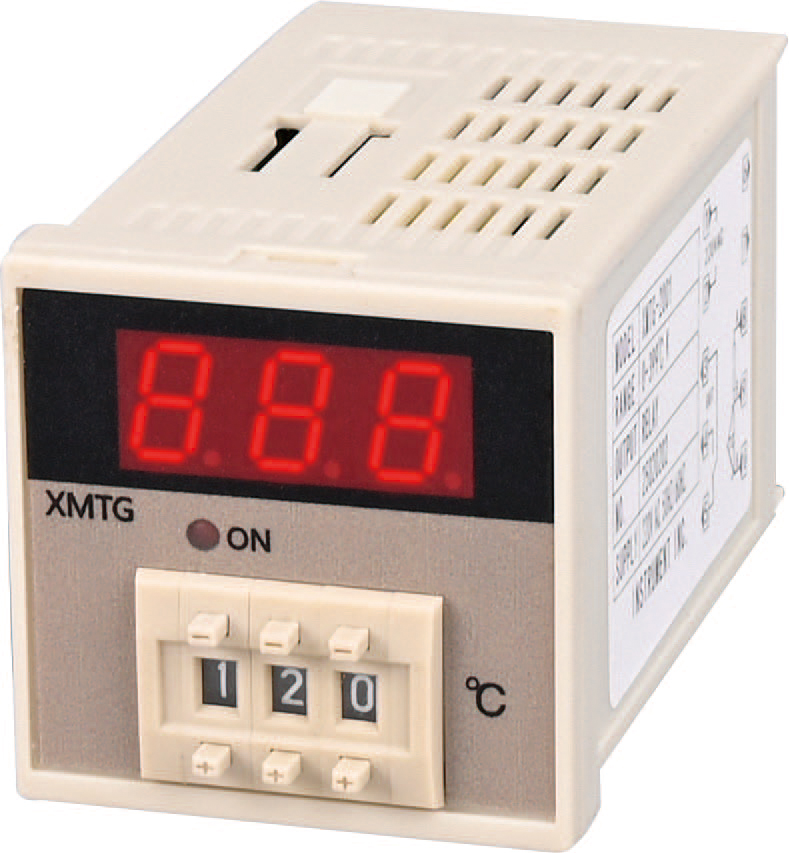
Psychrometric Coupling and the Hidden Danger of Dew Point Drift
Managing a commercial warehouse, switchgear room, or environmental chamber is rarely as simple as setting a wall thermostat and walking away. Heat and airborne moisture are physically locked together on the psychrometric chart. Because warm air holds significantly more water vapor than cold air, a sudden five-degree drop in ambient temperature will send relative humidity spiking upward even if zero outside moisture enters the room. Relying on separate, uncoordinated thermostats and humidistats often triggers a costly tug-of-war where the cooling coil over-chills the space, causing a standalone humidifier to dump steam into the ductwork while the chiller is still running.
Maintaining ideal storage conditions requires a unified temperature and humidity controller capable of cross-referencing thermal and moisture feedback loops simultaneously. When air cools near the surface of a metal storage rack or an electrical busbar, localized relative humidity approaches 100 percent and crosses the dew point threshold. According to ASHRAE Handbook guidelines for museum, pharmaceutical, and industrial storage environments, allowing surface condensation for even a few hours accelerates metallic oxidation, ruins hygroscopic powders, and triggers mold spore germination on cardboard packaging. By calculating real-time vapor pressure and dew point margins, a dual-channel digital regulator sequences heating, cooling, dehumidification, and misting relays without letting the two control loops fight each other.
Capacitive Polymer Sensing and Dual-Loop Actuator Sequencing
Inside the instrument housing, precision environmental regulation starts at the sensor probe. Modern industrial controllers typically pair a platinum resistance thermometer, such as a three-wire PT100 element, with a thin-film capacitive polymer humidity chip. As ambient moisture molecules absorb into the dielectric polymer layer, the capacitance shifts proportionally, which the internal analog-to-digital converter translates into a linear relative humidity reading. To keep the mechanical actuators from hunting back and forth, the microprocessor applies either independent hysteresis deadbands or pulse-width modulated PID outputs across separate relay banks.
| Sensing and Control Architecture | Typical Measurement Accuracy | Actuator Output Configuration | Primary Advantage in Storage Applications | Operational Limitation to Watch |
|---|---|---|---|---|
| On-Off Hysteresis Dual Relay | Plus or minus 0.5 degrees Celsius and 3 percent RH | Mechanical dry-contact relays for compressor, heater, and exhaust fan | Prevents rapid compressor short-cycling in high-volume rooms | Leaves wider sawtooth swings around the target setpoint |
| Coupled PID Analog and SSR Loop | Plus or minus 0.2 degrees Celsius and 1.5 percent RH | 4-20 mA analog modulating valves plus zero-cross solid-state relays | Holds tight dew point margins during rapid door-opening recovery | Requires careful loop tuning to avoid valve actuator wear |
When the sensor detects rising moisture while dry-bulb temperature sits right on target, a smart temperature and humidity controller initiates reheat dehumidification. Instead of simply blowing cold air into the room, the unit engages the chilled water coil or DX compressor to condense water out of the airstream while simultaneously pulsing electric strip heaters or hot-gas bypass valves. This coordinated action strips latent moisture out of the warehouse without sub-cooling the stored goods below their specified thermal window.
Eliminating Condensation inside a Coastal High-Voltage Switchgear Annex
During a facility retrofit at an offshore wind power substation and spare parts depot in Eastern China, the site maintenance crew faced recurring insulation resistance faults and surface rust on reserve vacuum circuit breakers. The storage annex experienced heavy marine fog, pushing indoor relative humidity past 82 percent overnight while daytime solar load baked the insulated steel roof to 38 degrees Celsius. The original setup relied on basic bimetallic thermostats wired to cabinet space heaters, which ran non-stop during summer afternoons and cooked the rubber gaskets without actually pulling moisture out of the room air.
The engineering team upgraded the panels with DIN-rail mounted dual-loop digital controllers wired to remote RS485 temperature-humidity transmitters and compact thermoelectric dehumidifiers. By setting an upper humidity trip point at 55 percent RH with a three-percent hysteresis band and linking the auxiliary heater relay to a calculated dew-point offset algorithm, the system only energized the anti-condensation heaters when metal surface temperatures dropped within four degrees of the condensation point. Over the following monsoon season, interior moisture stayed locked between 48 and 54 percent RH, cabinet power consumption dropped by 40 percent, and dielectric hipot failures on stored switchgear spares fell to zero.
Probe Placement Rules, Airflow Dead Zones, and Calibration Limits
Buying a high-accuracy panel meter will not save a storage facility if the sensing probe is mounted in a stagnant corner or directly in front of a supply diffuser. Large storage enclosures suffer from severe thermal stratification, where heat rises toward the ceiling while dense, damp air settles near the concrete slab. Under IEC 60068-3-11 standards for climatic chamber and enclosure testing, environmental uniformity depends heavily on air velocity and probe positioning relative to the stored payload.
Mount combined temperature and humidity probes at the breathing zone of the stored inventory, keeping them at least 1.5 meters away from exterior walls, loading dock doors, and direct HVAC discharge vents.
Install sintered stainless steel or PTFE membrane filter caps over capacitive humidity sensors in dusty grain silos or powder warehouses so airborne particulates do not clog the polymer pores.
Wire RS485 Modbus communication lines using twisted-pair shielded cable grounded at one end only, preventing electromagnetic interference from warehouse forklifts and variable frequency fans from corrupting digital telemetry.
Schedule annual salt-bath or chilled-mirror reference checks, because capacitive humidity elements naturally drift by 1 to 2 percent RH per year when exposed to volatile solvents, outgassing plastics, or sulfur compounds.
Facility managers must also stay realistic about what a single-point controller can achieve in an oversized building. One wall-mounted sensor cannot represent the microclimate inside tightly shrink-wrapped pallets stacked six tiers high. In massive cold-chain logistics centers or archival vaults, a single temperature and humidity controller must work alongside distributed wireless data loggers and destratification ceiling fans to ensure conditioned air actually penetrates the racking aisles.
Panel Integration for Long-Term Environmental Stability
Keeping sensitive raw materials, electronic assemblies, and perishable bulk goods inside strict storage tolerances demands control hardware that shrugs off voltage spikes, damp air, and continuous duty cycles. Suosite supports industrial climate control and switchgear builders with rigorously calibrated sensing modules, flame-retardant housing designs, and dependable bulk supply chains so facility operators can maintain rock-solid storage conditions year-round.
Table of Contents
- Psychrometric Coupling and the Hidden Danger of Dew Point Drift
- Capacitive Polymer Sensing and Dual-Loop Actuator Sequencing
- Eliminating Condensation inside a Coastal High-Voltage Switchgear Annex
- Probe Placement Rules, Airflow Dead Zones, and Calibration Limits
- Panel Integration for Long-Term Environmental Stability