
 EN
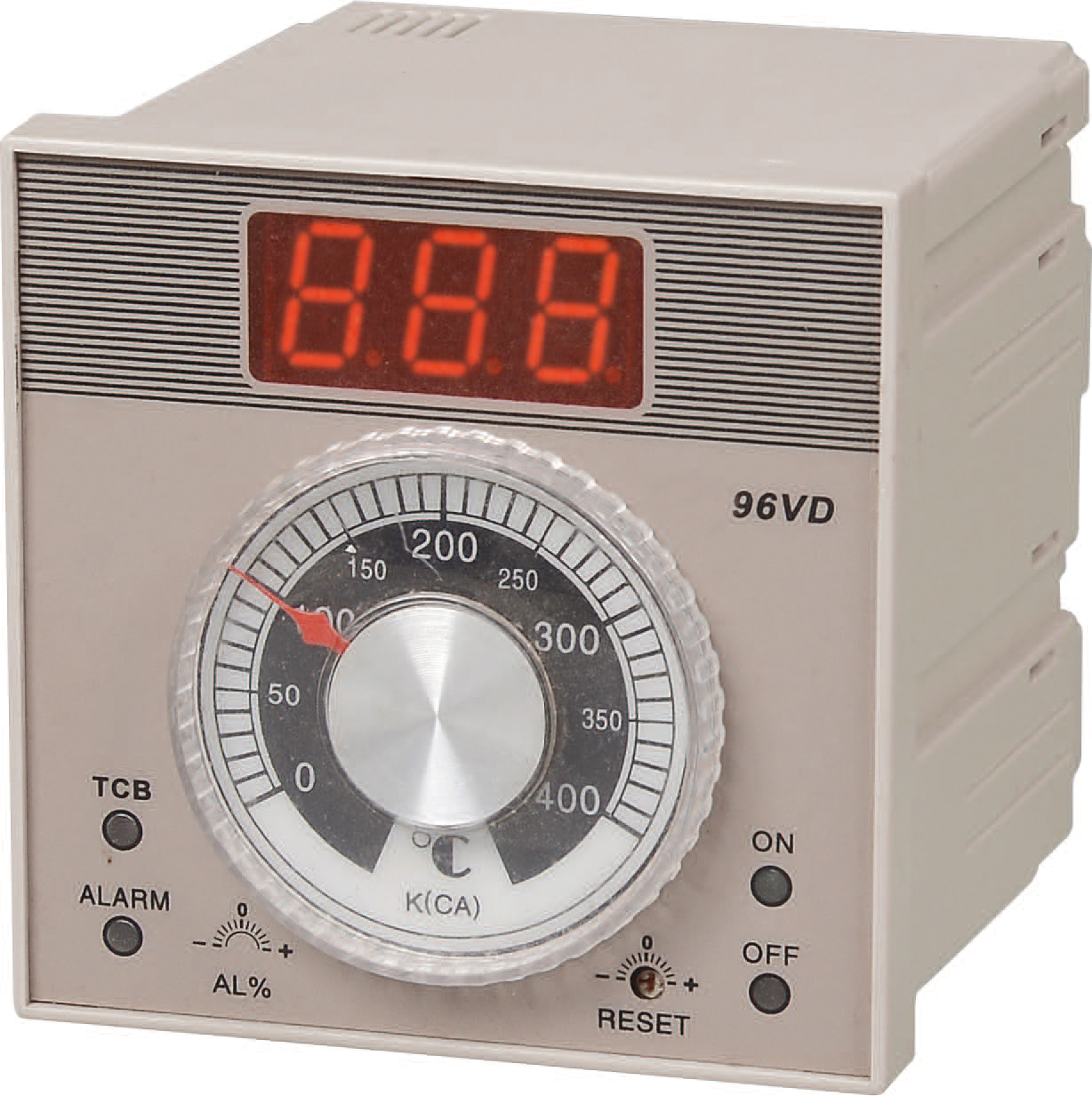
Why Thermal Overshoot Ruins Microstructure and Surface Finish
Anyone who has pulled a warped polymer sheet off an extrusion line or watched a batch of tempered chocolate turn chalky and crumbly knows that material structure lives and dies by thermal stability. Basic thermostat switches operate on a deadband principle, flipping heating elements fully on until the sensor hits a high limit and then cutting power completely until the temperature drops below a low threshold. While that bang-bang approach works fine for a domestic water heater, it wreaks havoc on continuous manufacturing lines where achieving a consistent product texture requires holding melt viscosity, crystal growth, or moisture evaporation inside a fraction of a degree.
When a heating barrel or curing zone swings three or four degrees past its target setpoint, the internal molecular behavior of the raw material shifts permanently. In thermoplastic extrusion, localized overheating breaks down polymer chains and drops melt viscosity, leaving glossy streaks alongside rough, unmelted sharkskin defects on the outer profile. In commercial baking or snack frying, thermal lag followed by aggressive heat recovery scorches the outer crust before internal starch gelatinization finishes, producing a soggy core surrounded by a brittle shell. Installing a dedicated PID temperature controller eliminates these wild thermal oscillations by continuously calculating the exact percentage of power needed to balance heat loss against process load.
Breaking Down Proportional, Integral, and Derivative Tuning Loops
Instead of waiting for a process variable to cross a trip point, a closed-loop thermal regulator monitors the real-time error between the target setpoint and the actual feedback from a thermocouple or platinum resistance thermometer. Under the international IEC 61131-3 standard for industrial automation control algorithms, the control loop splits its mathematical corrective action into three cooperative terms that react to present, past, and future thermal deviations.
| Control Loop Parameter | Primary Mathematical Function | Direct Impact on Thermal Behavior | Consequence of Improper Tuning on Final Texture |
|---|---|---|---|
| Proportional Band (P) | Multiplies current error by a gain factor to scale immediate output power | Throttles heater duty cycle down as the process approaches the setpoint | Too narrow causes rapid hunting and surface ripples; too wide leaves a sluggish response |
| Integral Reset (I) | Sums accumulated error over time to shift the baseline power output | Eliminates steady-state offset caused by ambient heat loss or cold feed stock | Excessive integral action drives deep post-startup overshoot, scorching heat-sensitive compounds |
| Derivative Rate (D) | Measures the rate of temperature change per second to apply early braking | Dampens sudden thermal spikes when line speed changes or oven doors open | Over-aggressive derivative settings amplify sensor noise, triggering erratic solid-state relay chatter |
Getting these three terms balanced takes more than flipping on factory auto-tune and walking away. Auto-tuning routines work by injecting an intentional step disturbance into the heating zone and measuring the natural thermal lag and rise rate of the machinery. However, if an operator triggers auto-tune while an extruder barrel is empty, the calculated parameters will fail once cold resin pellets flood the screw channel. Fine-tuning the proportional band and derivative time under actual production load ensures the PID temperature controller anticipates endothermic material absorption without over-firing the heater bands.
Real-World Thermal Stabilization on a Twin-Screw Extrusion Line
During a process upgrade at a specialty packaging and food-grade film plant in Southeast Asia, the production engineering team struggled with severe thickness variations and a cloudy, sandpaper-like surface texture on biodegradable polylactic acid sheets. The line used six independent barrel heating zones controlled by legacy mechanical contactors and poorly configured on-off regulators. Whenever cold resin entered the feed throat, zone three dropped four degrees below its 185 degrees Celsius target, prompting the contactors to slam full power into the cast-in aluminum heaters. Because aluminum blocks hold massive thermal inertia, the barrel temperature kept climbing to 193 degrees Celsius long after the contactors opened, degrading the ester bonds and creating gas micro-voids across the extruded web.
The maintenance crew swapped out the mechanical relays for zero-cross solid-state relays driven by a high-speed PID temperature controller featuring fuzzy logic overshoot suppression and a 100-millisecond sampling rate. By shortening the proportional cycle time to one second and dialing in derivative braking to counter the residual heat soak of the cast aluminum shells, the team locked all six barrel zones within plus or minus 0.3 degrees Celsius of the target profile. Within two shifts, film haze dropped by 60 percent, tensile uniformity stabilized across the entire roll width, and scrap rates from brittle edges fell from 11 percent down to under 1.5 percent.
Sensor Placement, Actuator Pairing, and Control Limitations
Even the most advanced control algorithm cannot fix a poorly designed thermal loop. A controller only knows what its sensor reports, meaning air gaps inside a thermowell or a loose bayonet thermocouple adapter will introduce artificial dead time into the feedback loop. According to ASTM E230 standards for temperature-electromotive force tables and industrial thermocouple tolerances, using uncalibrated Class 2 J-type sensors or running unshielded extension wires next to high-voltage variable frequency drives injects millivolt noise that tricks the derivative algorithm into phantom output swings.
Seat spring-loaded thermocouples or Class A PT100 sensors flush against the active heat transfer wall, using thermal conductive paste to eliminate insulating air pockets.
Pair fast-acting voltage pulse outputs with solid-state relays or silicon-controlled rectifiers rather than mechanical contactors, which wear out after a few hundred thousand switching cycles.
Group multi-zone heating manifolds onto phase-angle fired power regulators when controlling low-resistance molybdenum or silicon carbide heating elements to prevent transformer inrush trips.
Configure loop break alarms and heater current transformers so the PID temperature controller immediately flags a burned-out cartridge heater before cold spots ruin a production run.
Plant engineers also need to recognize the physical limits of single-loop PID architecture. In processes with massive transport delay, such as long tunnel ovens where conveyor speed changes constantly, or exothermic chemical reactors where internal heat generation accelerates nonlinearly, a standard single-loop unit will struggle to keep up. Those heavy-lag environments require cascade control configurations, where a master controller monitors actual product core temperature and dynamically adjusts the setpoint of a secondary slave controller managing the heating jacket or air plenum.
Commissioning Checks for Long-Term Batch Repeatability
Maintaining uniform product feel, density, and visual gloss across seasonal ambient shifts requires routine verification of the thermal control cabinet. Over months of vibration and thermal cycling, terminal screws loosen, increasing contact resistance and skewing resistance temperature detector readings upward. Setting up a quarterly preventive maintenance schedule to verify cold-junction compensation, clean cooling vents on solid-state heat sinks, and audit PID parameters against seasonal raw material moisture changes keeps batch-to-batch variation near zero.
Selecting industrial instrumentation built with clean analog-to-digital signal isolation and rock-solid firmware makes hitting tight thermal windows much easier on the shop floor. Suosite supports automated manufacturing lines with rigorously tested temperature control units, strict component quality control, and responsive supply chain fulfillment so process engineers can maintain stable thermal profiles shift after shift.
Table of Contents
- Why Thermal Overshoot Ruins Microstructure and Surface Finish
- Breaking Down Proportional, Integral, and Derivative Tuning Loops
- Real-World Thermal Stabilization on a Twin-Screw Extrusion Line
- Sensor Placement, Actuator Pairing, and Control Limitations
- Commissioning Checks for Long-Term Batch Repeatability