
 EN
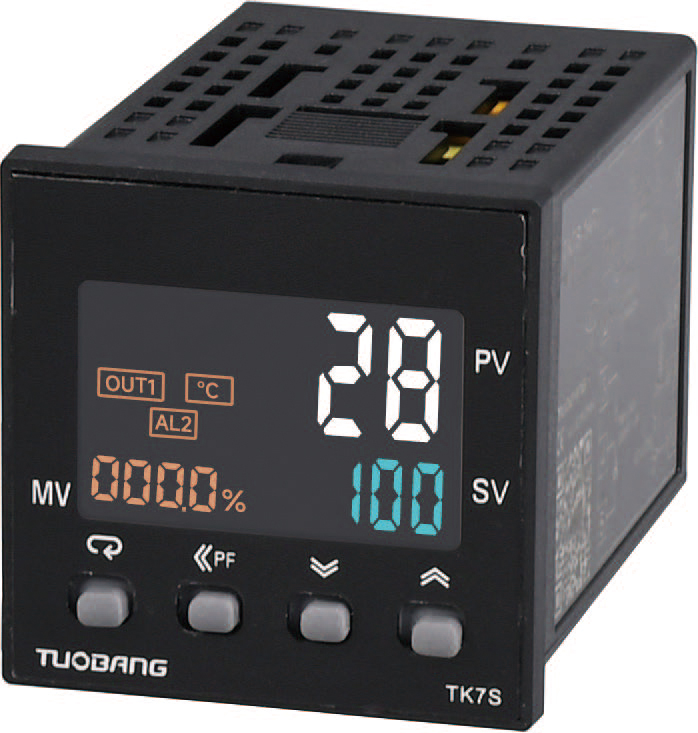
The core job of a temperature controller in industrial settings
Walk into any plant that deals with heat, and there is a device quietly doing the most important work in the room. It reads the temperature, compares it to a target, and adjusts the heat source to close the gap. That is the temperature controller in a nutshell. It sounds simple. In practice, the details matter enormously.
A temperature controller is a closed-loop instrument. It takes a signal from a sensor, such as a thermocouple or RTD, processes that signal against a setpoint, and drives an output. That output might go to a relay, a solid-state relay, or an analog signal that throttles a heater. The goal is straightforward: keep the process temperature at the target value despite disturbances from ambient conditions, load changes, or material variations.
In many industrial heating applications, temperature control is not about keeping something warm. It is about protecting the material. Excessive temperature can degrade polymers, distort metal parts, or alter the taste and texture of food products. Too low a temperature can leave adhesives uncured or bacteria alive. The controller is the component that holds the line.
How a closed control loop actually works
The concept of a control loop can be described without diving too deep into equations. A sensor measures the process variable, which is the actual temperature. The controller subtracts that measurement from the setpoint to get an error value. Based on the size and direction of that error, the controller calculates an output. That output changes the power delivered to the heater. The heater changes the temperature. The sensor sees the change. The cycle repeats, usually several times per second.
What makes this loop tricky is that every component introduces delay. The sensor has a response time. The heater takes time to warm up. The material being heated has its own thermal mass. By the time the controller sees a temperature change, the heater has already been delivering energy for a while. This lag is why simple controllers can overshoot the target and why more sophisticated control algorithms exist.
Sensor choice shapes everything downstream
The sensor is often treated as an afterthought, but it dictates what the controller can achieve. A standard K-type thermocouple has a wide temperature range and responds quickly, but its accuracy is typically in the range of a few degrees Celsius without cold-junction compensation. An RTD, such as a Pt100, offers better accuracy and stability at lower temperatures, which is why it is common in food processing and pharmaceutical applications where tight tolerances are required.
The calibration of the sensor matters as much as the sensor type. IEC 60751 defines tolerance classes for industrial RTDs, and IEC 60584 covers thermocouple calibration. A controller paired with an uncalibrated sensor is essentially guessing. Even a well-calibrated sensor drifts over time, especially in harsh environments with vibration, moisture, or corrosive atmospheres.
Output types and what they mean for real hardware
The controller’s output stage determines how the heat is actually modulated. The simplest option is a mechanical relay that turns a heater on or off. Relays are robust and inexpensive, but they wear out. A relay rated for a hundred thousand electrical operations might last only a few months in a process that cycles frequently.
Solid-state relays address the wear issue by eliminating moving contacts. They switch faster and last longer, which makes them suitable for the time-proportioning output used in PID control. For even finer control, a 4-20 mA analog output can drive a silicon-controlled rectifier or a power controller that varies the voltage continuously. The choice depends on the process dynamics and the acceptable level of temperature ripple.
| Output Type | Switching Mechanism | Typical Lifespan | Best Suited For |
|---|---|---|---|
| Mechanical relay | Physical contact | ~100,000 operations | Low-cycle on/off applications |
| Solid-state relay | Semiconductor | Millions of cycles | PID time-proportioning |
| Analog (4-20 mA) | Continuous signal | No wear mechanism | SCR/thyristor power control |
The specification sheet tells only part of the story
Reading a controller datasheet can be misleading if the application context is ignored. A controller with an accuracy specification of plus or minus 0.1 percent of span might perform beautifully in a stable laboratory environment but struggle in a foundry where ambient temperature swings by twenty degrees across a shift. The control algorithm, the quality of the sensor input circuitry, and the noise immunity of the electronics all contribute to real-world performance.
Calibration standards such as ASTM E2875 provide guidance for verifying temperature controller performance in environmental chambers, but similar rigor is often absent on the factory floor. A controller that has never been calibrated may be off by several degrees, and no amount of fancy tuning will fix that.
In one retrofit project at a chemical plant in southern China, a team discovered that the existing controllers had never been calibrated since installation. The process was running five degrees hotter than the operators believed, which was silently reducing yield. Swapping in calibrated controllers and a Pt100 sensor package corrected the issue, and the improvement in product consistency was noticeable within a single production week.
Where Suosite fits into the picture
Zhejiang Suosite Electrical Technology Co., Ltd., operating under the Suosite brand, manufactures temperature controllers, solid-state relays, and thermocouples from its facility in Taizhou. The company supports OEM and ODM work, which means control panels can be specified with matching controllers, sensors, and switching hardware rather than sourcing each component separately. For integrators who value a single point of accountability, that kind of vertical coordination simplifies procurement and reduces the risk of compatibility issues between a controller and its output stage. Suosite’s product range covers the common form factors used in panel builds, and the manufacturing operation is set up to handle both standard orders and custom configurations.