
 EN
EN
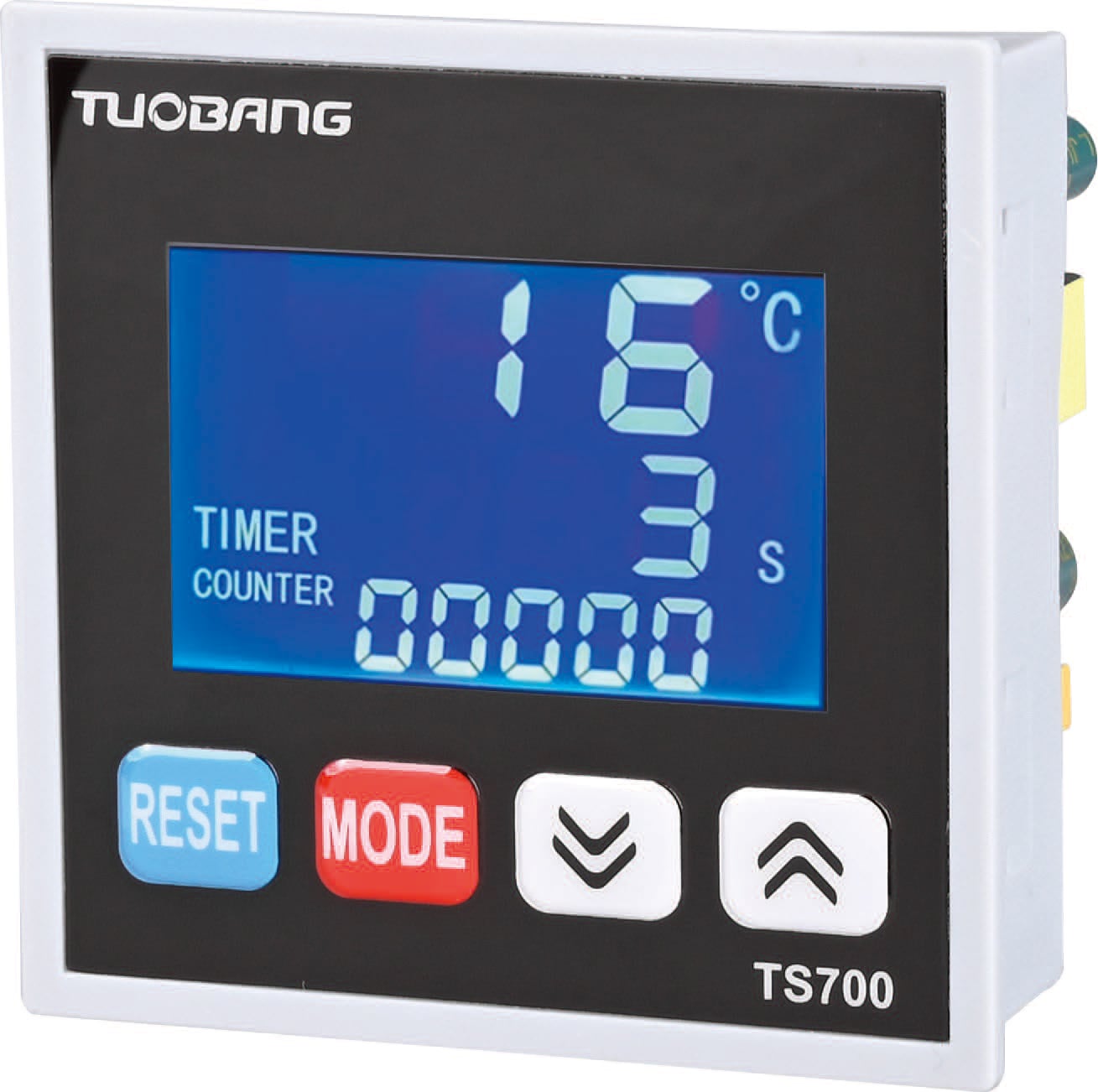
The Selection Trap That Catches Most Buyers
Choosing a temperature controller looks simple at first glance. The specifications seem straightforward: input type, output type, accuracy rating, price. Many buyers treat it like a commodity purchase—compare the numbers, pick the cheapest one that meets the basic requirements, and move on. This approach works until it doesn't.
The problem is that temperature controllers live in a complex environment. The sensor type, the control algorithm, the output switching method, the electrical noise on the line, and even the physical mounting location all affect how well the controller performs. A controller that works perfectly in one application may struggle in another with apparently similar requirements. The selection process needs to account for the full picture, not just the headline numbers.
A thoughtful selection process starts with understanding the process itself. What temperature range does it operate in? How fast does it change? What are the consequences of a control failure? Answering these questions provides the foundation for making a choice that actually works in practice.
Sensor Compatibility: The Non-Negotiable First Step
Every temperature controller must work with a temperature sensor. The sensor choice determines the controller's input requirements, and getting this wrong is a common mistake. Thermocouples and RTDs are the two main sensor types used in industrial temperature control, and they are not interchangeable.
Thermocouples generate a small voltage proportional to the temperature difference between the measuring junction and the reference junction. They are rugged, inexpensive, and work over a wide temperature range—from cryogenic to over 1000°C depending on the type. However, their output is nonlinear and requires cold-junction compensation. Controllers intended for thermocouple inputs must include this compensation circuitry.
RTDs, particularly the Pt100 type, measure temperature by detecting changes in electrical resistance. They are more accurate and stable than thermocouples over moderate temperature ranges, typically up to about 500°C. They require a different input circuit—one that can measure resistance accurately, usually by passing a small current through the sensor and measuring the voltage drop.
The selection mistake to avoid: assuming a controller can handle any sensor type. Some controllers offer universal inputs that accept multiple sensor types. Others are fixed for a specific input. Checking this compatibility before purchase saves headaches during installation.
Control Algorithm: Beyond Simple On-Off
The control algorithm determines how the controller responds to temperature deviations. The simplest approach is on-off control: the output turns on when the temperature falls below the setpoint and turns off when it rises above. This works for applications where temperature can swing within a wide band, like a warehouse heater or a simple drying oven.
For processes that require tighter temperature control, PID control is the standard. A properly tuned PID controller anticipates how the temperature will change and adjusts the output proactively, minimizing overshoot and oscillation. The proportional term responds to the current error, the integral term corrects for accumulated error, and the derivative term anticipates future error based on the rate of change.
Some controllers offer fuzzy logic or adaptive control algorithms as alternatives to traditional PID. These can be useful for highly nonlinear processes or those with changing dynamics. However, for most industrial applications, a well-tuned PID controller remains the most practical and widely supported option.
One practical consideration: if the process has long thermal lag—meaning a long delay between an output change and a temperature response—the derivative term becomes particularly important. Controllers that allow independent adjustment of all three PID terms offer more flexibility than those with fixed or limited adjustments.
Output Type and Power Switching
The controller's output stage determines how it drives the heating or cooling equipment. This is where many selections go wrong. The output type must match the load being controlled, and the switching method affects both precision and reliability.
Relay outputs are the most common and the most straightforward. They close a set of contacts to energize the load. Mechanical relays are simple and inexpensive but wear out over time, particularly with frequent switching. For applications where the output cycles on and off frequently—which is common in precise temperature control—mechanical relays may require replacement sooner than expected.
Solid-state relay outputs offer an alternative. They switch electronically, with no moving parts, and can handle rapid cycling without wear. They are more expensive initially but often prove more cost-effective over the equipment's lifetime. The faster switching also enables finer temperature control, as the output can be modulated in smaller increments.
For applications requiring variable power rather than simple on-off control, an analog output may be appropriate. This could be a 4-20 mA signal or a 0-10 V signal that drives a proportional valve or a power controller. Analog outputs provide the smoothest control but require compatible actuators and more complex setup.
Environmental Factors and Installation Conditions
Temperature controllers do not operate in isolation. They are installed in panels, exposed to ambient heat, vibration, and electrical noise. These environmental factors can significantly affect performance and longevity.
Panel temperature is a frequent concern. Controllers generate their own heat, and if mounted in a crowded panel with poor ventilation, the internal temperature can rise well above the ambient rating. This can affect the accuracy of the temperature measurement, particularly for controllers that rely on internal reference junctions for thermocouple compensation. Some controllers offer ambient temperature compensation or wider operating temperature ranges to address this.
Electrical noise from nearby equipment—motors, drives, contactors—can couple into the sensor wiring and corrupt the temperature reading. Controllers with good input filtering and isolation are less susceptible to this. The wiring practices also matter: running sensor wires in separate conduits from power wires, using shielded cables, and keeping sensor wiring short all help reduce noise pickup.
Physical mounting is another consideration. Controllers come in standard panel cutout sizes, typically 48x48 mm, 72x72 mm, 96x96 mm, and various rectangular formats. The size affects the display readability and the number of available terminals. Choosing a controller that fits the existing panel cutout saves modification costs, but retrofitting a different size may be worthwhile if the application demands more features.
Decision Framework: A Structured Approach
Bringing these factors together into a coherent selection process helps avoid oversights. A practical framework follows four steps:
Define the process requirements: temperature range, acceptable tolerance, response time, and environmental conditions.
Determine the sensor type and wiring constraints: thermocouple or RTD, available sensor mounting, and distance from sensor to controller.
Select the control algorithm and output type: on-off, PID, or advanced; relay, SSR, or analog.
Verify compatibility with the installation environment: panel cutout size, ambient temperature, and electrical noise levels.
The table below summarizes common choices for different application profiles:
| Application Profile | Sensor | Control | Output | Typical Accuracy |
|---|---|---|---|---|
| Plastic extrusion barrel | Thermocouple K | PID | SSR | ±0.5°C |
| Chemical reactor | RTD Pt100 | PID with autotune | Analog 4-20 mA | ±0.2°C |
| Industrial oven | Thermocouple K | On-off or PID | Mechanical relay | ±2.0°C |
| Semiconductor chamber | RTD Pt100 | High-precision PID | SSR | ±0.1°C |
| Food processing line | Thermocouple T | PID | SSR | ±0.5°C |
These are general guidelines, not rigid rules. Each application has unique requirements that may call for different combinations. The framework provides a starting point for the selection conversation.
The Supplier's Role in the Selection Process
The controller manufacturer or supplier can be a valuable resource during selection, provided they have the technical depth to understand the application. A supplier that simply takes orders without asking questions about the process is unlikely to help avoid selection mistakes. One that asks about sensor types, load characteristics, and environmental conditions is more likely to recommend the right product.
Manufacturing capability also matters. Suppliers with in-house production of key components—such as solid-state relays—can offer better integration and consistent quality across the control system. They can also respond more quickly to custom requirements or technical issues.
Zhejiang Suosite Electrical Technology Co., Ltd. maintains production capabilities that span temperature controllers and solid-state relays, allowing for integrated solutions that reduce compatibility concerns. The company's experience across multiple industries provides perspective that helps customers navigate the selection process with confidence.
Table of Contents
- The Selection Trap That Catches Most Buyers
- Sensor Compatibility: The Non-Negotiable First Step
- Control Algorithm: Beyond Simple On-Off
- Output Type and Power Switching
- Environmental Factors and Installation Conditions
- Decision Framework: A Structured Approach
- The Supplier's Role in the Selection Process