
 EN
EN
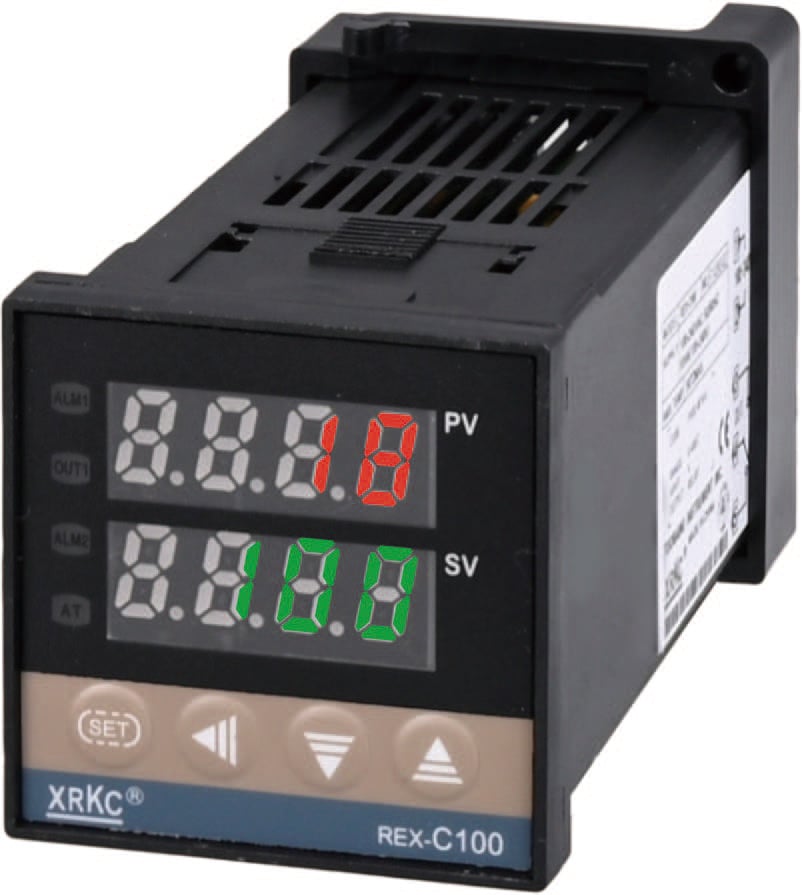
The Hidden Cost of Manual PID Tuning
Manual tuning of a PID temperature controller is one of those tasks that looks straightforward on paper but turns into a time sink on the shop floor. The traditional approach involves setting proportional, integral, and derivative values through trial and error, then observing the response, adjusting again, and repeating the cycle. For a single loop, this might take an hour or two. For a machine with eight heating zones, that adds up to a full day of engineering time—assuming everything goes smoothly. In reality, things rarely go smoothly.
The core issue is that every thermal system behaves differently. A plastic extrusion barrel responds to heat differently than a chemical reactor vessel or a food packaging heat-seal bar. The mass, the thermal conductivity of the material, the ambient conditions, and even the age of the heating elements all affect how the system reacts to control inputs. Manual tuning forces an engineer to guess the system's characteristics and then compensate blindly. It works often enough to be dangerous, but rarely well enough to be optimal.
An auto-tuning feature changes this dynamic entirely. Instead of relying on human intuition, the controller runs a diagnostic sequence: it applies a controlled perturbation to the system, measures the response curve, and calculates the PID parameters that will produce stable, responsive control for that specific load. The process takes minutes instead of hours, and the result is mathematically grounded rather than guesswork-based.
What Actually Happens During an Auto-Tune Cycle
Understanding what happens inside the controller during auto-tuning helps explain why the feature matters. When an operator initiates an auto-tune, the controller temporarily takes over the heating or cooling output and applies a known pattern of changes—typically a step change or a series of small oscillations. As this happens, the controller's internal logic monitors the temperature sensor's feedback in real time, recording how quickly the temperature rises, how much overshoot occurs, and how the system settles.
From this data, the controller derives several critical parameters: the system's time constant (how fast it responds), its dead time (the delay between an output change and a measurable temperature change), and its gain (how much temperature changes per unit of output). These three values feed into the PID algorithm, producing a set of tuning constants tailored to that exact system at that exact moment.
One nuance worth noting: auto-tuning is not a one-and-done operation. Thermal systems change over time. Heating elements degrade, insulation properties shift, and production rates vary. A controller with auto-tuning capability can be re-tuned periodically or even on demand when process behavior changes. This adaptability is what separates a truly useful temperature controller from one that merely checks a box on a spec sheet.
A Real-World Example: The Injection Molding Retrofit
Consider a mid-sized injection molding facility in eastern China that runs a dozen presses, each with multiple barrel heating zones. The maintenance team had always tuned each zone manually, relying on a senior technician's "feel" for the right PID values. The results were inconsistent—some zones held temperature within a couple of degrees, others drifted by five or six degrees, and every product changeover required a fresh round of tuning.
During a planned maintenance shutdown, the plant engineer decided to test an auto-tuning capable controller on one press. The auto-tune routine ran in about eight minutes per zone. The resulting PID values were noticeably different from the manually derived settings—in some cases, the integral term was half what the technician had been using. After the retuned controller went live, that press held temperature within a tighter band across all zones, and the operator reported that warm-up time decreased noticeably. The real win, however, was the changeover time: switching from one mold to another now required only a quick auto-tune cycle instead of an hour of manual tweaking.
That single press became a proof of concept. Over the following months, the facility retrofitted the remaining machines. The maintenance workload related to temperature control dropped significantly, and product quality became more consistent across shifts. The senior technician, initially skeptical, later admitted that the auto-tuned parameters outperformed his "feel-based" settings on every zone they compared.
Where Auto-Tuning Falls Short (And Why That's Okay)
Auto-tuning is powerful, but it is not magic. The feature works best when the thermal system is relatively linear and when the process can tolerate a brief period of controlled oscillation during the tuning routine. For systems that are highly nonlinear—such as those with phase-change materials or exothermic chemical reactions—the standard auto-tune may produce parameters that work at one operating point but fail at another.
There is also the question of disturbance rejection. Auto-tuning optimizes for setpoint response, meaning it calculates PID values that get the temperature to the target quickly and with minimal overshoot. However, a controller tuned for setpoint response may not handle external disturbances—like a door opening on an oven or a sudden change in material feed rate—as effectively as a controller tuned specifically for disturbance rejection.
For these reasons, many industrial temperature controllers offer multiple auto-tuning modes or allow manual fine-tuning after the auto-tune completes. The auto-tune provides an excellent starting point, and the experienced engineer can then adjust the parameters based on real-world performance. The feature does not replace expertise; it amplifies it.
Industry Standards and Performance Benchmarks
The value of auto-tuning is increasingly recognized in industry standards and technical literature. Research published in IEEE journals has demonstrated that self-tuning PID controllers can reduce commissioning time from days to hours in multi-loop systems. The underlying principle—that automated parameter identification produces more consistent results than manual methods—is supported by a growing body of peer-reviewed work.
In practical terms, the performance difference between a manually tuned and an auto-tuned controller can be substantial. The table below summarizes typical outcomes observed across multiple industrial applications:
| Performance Metric | Manual Tuning (Typical) | Auto-Tuned (Typical) |
|---|---|---|
| Commissioning time per loop | 45–90 minutes | 5–15 minutes |
| Steady-state temperature deviation | ±2.0°C to ±5.0°C | ±0.5°C to ±1.5°C |
| Overshoot on startup | 5%–15% of setpoint | 2%–5% of setpoint |
| Re-tuning required after process change | Significant manual effort | One auto-tune cycle |
These figures reflect general industry experience rather than any specific product claim. The exact improvement depends on the system's complexity and the operator's familiarity with manual tuning techniques.
The Bottom Line on Auto-Tuning
An auto-tuning feature transforms a temperature controller from a component that requires expert attention into a tool that delivers consistent results with minimal intervention. For production environments where uptime matters and skilled labor is not always available, this capability directly impacts the bottom line. It reduces commissioning time, improves temperature stability, and makes process changeovers faster and more predictable.
That said, auto-tuning is not a substitute for understanding the process. The best results come when engineers use auto-tuning as a starting point, validate the results against process requirements, and make adjustments where necessary. The feature is a force multiplier—it takes what a skilled engineer does and makes it faster, more repeatable, and accessible to a broader range of personnel.
Manufacturers that build auto-tuning into their temperature controllers demonstrate an understanding of real-world production challenges. Zhejiang Suosite Electrical Technology Co., Ltd. incorporates this capability across its controller lineup, recognizing that production engineers need tools that work reliably without demanding excessive setup time. The company's focus on practical features like auto-tuning reflects a broader commitment to solving the problems that actually matter on the factory floor.