
 EN
EN
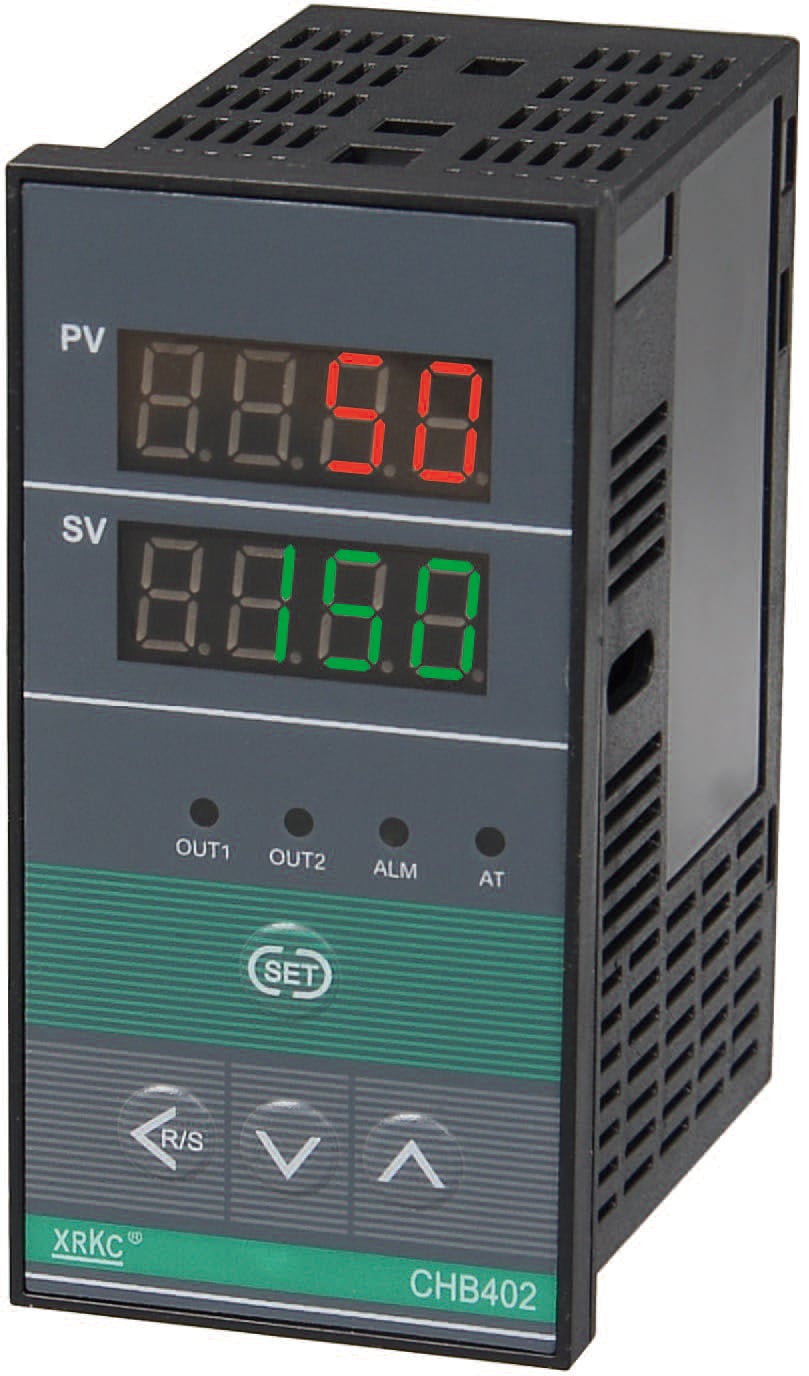
The Precision Gap That Costs More Than You Think
Temperature control in manufacturing often gets treated as a secondary concern—something that just needs to be "close enough." The reasoning goes: if the product comes out looking right and passing basic quality checks, the temperature must be fine. This line of thinking overlooks something important. A temperature deviation that seems harmless on the surface can quietly drive up scrap rates, shorten equipment life, and create quality issues that only show up weeks later in the field.
The gap between "good enough" and genuinely precise control is not measured in degrees alone. It shows up in the consistency of the finished product, the predictability of the production process, and the ability to run the same recipe tomorrow that ran today. When temperature drifts by even a couple of degrees, the material properties change. In plastics, viscosity shifts. In chemical reactions, conversion rates vary. In semiconductor processing, layer thicknesses deviate. Each of these effects compounds, turning small temperature errors into significant yield losses.
A high-precision temperature controller addresses this by maintaining temperature within a tight band around the setpoint, often within a fraction of a degree. This level of control is not about chasing a number on a display. It is about making the process repeatable, shift after shift, batch after batch.
The Mechanical and Electrical Foundation of Precision
Achieving high precision in temperature control is not simply a matter of using a better sensor or a faster processor. The entire measurement and control chain must work together. The sensor must provide accurate, stable readings. The input circuitry must filter out electrical noise without introducing lag. The control algorithm must respond to deviations quickly but without overcorrecting. And the output stage must deliver power to the heating or cooling elements reliably and consistently.
One often-overlooked factor is the quality of the analog-to-digital conversion. A controller with a 12-bit ADC can resolve temperature changes down to about 0.1°C with a typical thermocouple input. A 16-bit ADC improves that resolution by a factor of sixteen. This matters because the control algorithm can only act on what it can measure. If the measurement lacks resolution, the control will lack precision, regardless of how sophisticated the PID logic might be.
The electrical environment also plays a role. Industrial settings are filled with noise sources—motors starting and stopping, variable frequency drives, welding equipment. These create electrical interference that can corrupt temperature readings. High-precision controllers employ robust filtering and isolation techniques to reject this noise, ensuring that the control decisions are based on actual temperature rather than contaminated signals.
One Factory's Journey from Drift to Stability
A specialty chemical manufacturer in the Yangtze River Delta region operated a batch reactor that produced a polymer used in automotive coatings. The reactor's temperature had always been controlled by a standard industrial controller with a rated accuracy of about ±1.5°C. The production team accepted this as normal and adjusted the recipe slightly from batch to batch to compensate for the temperature variations.
The issue was that the compensation was never quite right. Some batches came out with slightly different viscosity, requiring additional blending. Others had color variations that triggered rework. The plant manager estimated that the temperature-related inconsistencies were responsible for roughly 5 to 8 percent of production being downgraded or reworked each month.
They installed a high-precision temperature controller on one reactor as a trial. The new unit held temperature within ±0.3°C of setpoint under the same operating conditions. The first few batches came out indistinguishable from one another. Viscosity measurements were consistent. Color matched across batches. Over a three-month trial period, the downgrade rate on that reactor dropped to under 1 percent. The plant subsequently upgraded the remaining reactors, and the overall yield improvement justified the investment within a year.
The Cost-Benefit Reality of Precision Upgrades
Upgrading to high-precision temperature control involves real costs: the hardware itself, installation, configuration, and potentially retraining operators. The decision to upgrade requires a clear understanding of what precision is worth in a given application.
For processes where temperature directly affects product quality—such as heat treatment, polymerization, or semiconductor fabrication—the return on investment is often clear. A one-degree improvement in temperature control can translate into measurable reductions in scrap, rework, and customer complaints. For processes where temperature is less critical, the incremental benefit of higher precision may be marginal.
The table below provides a framework for evaluating the potential impact:
| Process Type | Typical Temperature Sensitivity | Potential Benefit of ±0.5°C Control |
|---|---|---|
| Polymer extrusion | Viscosity changes ~5-10% per °C | Reduced scrap, consistent dimensions |
| Chemical batch reaction | Reaction rate doubles per 10°C | Improved yield, fewer off-spec batches |
| Heat treatment of metals | Hardness varies with peak temperature | Consistent material properties |
| Food processing | Microbial growth and texture affected | Product safety, consistent quality |
| Semiconductor manufacturing | Layer thickness sensitive to temp | Higher device yield, reduced defects |
These figures are illustrative rather than prescriptive. The actual benefit depends on the specific process, the value of the output, and the baseline performance of the existing control system.
Beyond the Specification Sheet
When evaluating high-precision temperature controllers, it helps to look past the headline accuracy figure. A controller rated at ±0.1°C accuracy under ideal laboratory conditions may perform quite differently on a noisy factory floor. Factors like temperature drift over time, ambient temperature changes, and electrical interference can degrade real-world performance.
Sampling rate is another consideration. A controller that measures temperature once per second cannot respond to rapid changes as effectively as one that samples ten times per second. For processes with fast thermal dynamics—such as induction heating or thin-film deposition—a higher sampling rate directly improves control performance.
The control output type also matters. A controller that uses a solid-state relay output can switch heating power on and off much faster than one using a mechanical relay. This faster switching enables more precise control, particularly when combined with a control algorithm that can modulate output in small increments. Manufacturers with in-house production of solid-state relays, like Zhejiang Suosite Electrical Technology Co., Ltd., can integrate these components more tightly into the control system, reducing compatibility issues and improving overall reliability.
Matching Precision to the Application
Not every application requires the highest possible precision. A drying oven used for bulk materials may not benefit from ±0.1°C control; ±1°C might be perfectly adequate. The key is to match the controller's capability to the process's actual requirements.
An approach that works well in practice involves three steps. First, characterize the process: measure how much temperature actually varies under current control and observe how that variation affects the output. Second, determine the acceptable tolerance: what temperature range still produces acceptable product quality? Third, select a controller that can reliably maintain temperature within that tolerance under real operating conditions—not just in the lab.
This pragmatic approach avoids overspending on precision that provides no practical benefit. It also avoids underspending on a controller that cannot meet the process requirements, which ultimately costs more in scrap and rework than the upgrade would have cost.
Manufacturers with a broad product portfolio can offer controllers at various precision levels, allowing customers to select the right tool for the job. The key is having the engineering depth to understand both the product's capabilities and the customer's application requirements. This is the approach taken by temperature controller manufacturers who serve a wide range of industries, from plastics to chemicals to electronics.