
 EN
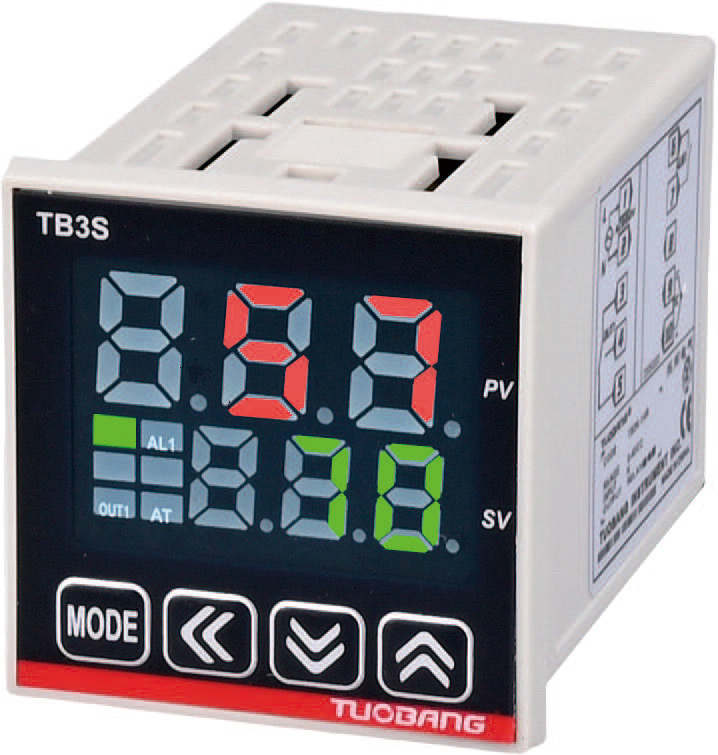
A furnace does not hold temperature by switching a heater on and off
The simplest temperature control scheme is a thermostat. The heater runs until the sensor reads the setpoint, then it stops, and the cycle repeats. On a small oven or a water bath, that behavior can look adequate. On a heat treatment furnace, it falls apart quickly.
The reason is thermal lag. A furnace has mass in the lining, the hearth, the fixture, and the workload itself. When the heating elements are energized, the sensor does not see the effect immediately. By the time the controller decides to cut power, the stored heat already in the elements and refractory continues to push the furnace temperature upward. The result is overshoot. The furnace does not stop at the setpoint. It sails past it, then waits for the temperature to fall back, then overshoots again on the recovery. That oscillation is not a tuning inconvenience. It is a metallurgical variable.
A PID controller does not wait for the error to appear before acting. The proportional term responds to the current deviation, the integral term accumulates past error and removes steady state offset, and the derivative term looks at the rate of change. For a furnace, the derivative term is doing the most visible work. It sees the temperature climbing fast near the setpoint and starts backing off the heat before the target is reached. That is how a well tuned loop lands on the setpoint instead of bouncing around it.
Overshoot is not just a nuisance, it changes the metallurgy
Heat treatment specifications are written around time at temperature. Soak time, ramp rate, and hold temperature all interact to produce a target microstructure. An overshoot event injects extra thermal energy that the process did not ask for. On a hardening cycle for a low alloy steel, that can mean a larger prior austenite grain size, which then carries through to the quenched and tempered condition.
Published comparisons between contactor based on off control and PID based firing on AISI 4140 steel make the point concretely. The on off arrangement overshot the setpoint, and the PID arrangement corrected that behavior while also producing a finer grain size in the treated samples. Hardness and general microstructure were comparable, but the grain size difference is the kind of detail that shows up in fatigue testing and in specification review. A furnace that meets the hardness callout but misses the grain size requirement is still a nonconforming furnace.
The same study reported an energy reduction on the order of fourteen percent when the overshoot was corrected. That number is specific to that furnace and that cycle, so it should not be read as a universal figure. The direction of the effect, however, is consistent. Overshoot wastes energy because the furnace heats past the target and then has to sit idle while the excess bleeds away. A controller that prevents the overshoot avoids that waste without any change to the insulation or the heating elements.
Standards turn control behavior into a compliance requirement
AMS 2750 and its automotive counterpart CQI-9 do not tell a shop which controller brand to buy. They define furnace classes by temperature uniformity, and they require documented system accuracy tests and temperature uniformity surveys at defined intervals. The uniformity tolerances are tight. A Class 1 furnace is held to plus or minus three degrees Celsius across the qualified working zone, and Class 2 sits at plus or minus five or six degrees Celsius depending on the revision.
Those tolerances are not achievable with a controller that swings above and below the setpoint by a wide margin. A uniformity survey measures the actual variation across the working zone at a stable condition. If the control loop is oscillating, the survey is measuring the oscillation as much as the furnace design. The survey may still pass if the swing happens to fall inside the band during the recording window, but the process is not stable, and the next survey may not be as forgiving.
The table below puts the two control approaches side by side on the dimensions that matter for a furnace qualification.
The standard also cares about instrumentation type and the independence of the measuring chain. AMS 2750 instrumentation types run from A to E, and the higher types require recording instruments, over temperature protection, and load sensors that operate separately from the control thermocouple. A PID controller sits inside that chain as the regulating device. It is not a substitute for the independent over temperature limit, but it is the component that keeps the regulating thermocouple from driving the furnace into a condition the limit device has to catch.
The sensor and the tuning are part of the same problem
A PID algorithm can only regulate what the thermocouple reports. If the control thermocouple is positioned near the heating elements, it reads the element temperature rather than the workload temperature. The controller then holds the element at setpoint while the parts in the center of the furnace sit below the target. The loop is stable, the display looks good, and the metallurgical result is wrong.
Thermocouple placement follows a simple rule in practice. The control sensor should be in the working zone, at the height of the load, away from direct radiation from the elements and away from door drafts. In a multi zone furnace, each zone has its own control thermocouple, and the uniformity survey confirms whether those zones actually agree with each other. A controller with excellent tuning cannot compensate for a sensor that is looking at the wrong part of the furnace.
Drift adds a second layer. A thermocouple that has been in service at high temperature for an extended period will shift its reading due to contamination, grain growth, or sheath degradation. The controller has no way to know that the signal has drifted. It regulates to the drifted value. AMS 2750 addresses this through periodic system accuracy tests and thermocouple replacement schedules, but the controller still depends on a valid input signal to do its job.
Tuning is the other half. A loop that was tuned on an empty furnace will behave differently when a full load is inserted, because the thermal mass and the heat demand change. Auto tuning helps on a new installation, but a furnace that runs different load sizes needs either conservative tuning that tolerates the range or a controller that supports multiple parameter sets. Fixed PID values copied from a similar machine are a common reason a furnace holds well on light loads and overshoots on heavy ones.
When the loop is stable, the failure modes become visible
A furnace with a stable PID loop gives the maintenance team a baseline. If the temperature starts hunting, the change is detectable. If the overshoot returns after months of clean behavior, something in the loop has shifted: a thermocouple has drifted, a heating element has partially failed, or the load pattern has changed.
That diagnostic value is easy to overlook. A furnace that always oscillates a little looks normal because the oscillation is the baseline. A furnace that normally sits flat and suddenly starts swinging tells the operator that a component is degrading. The PID controller is the instrument that makes that comparison possible, not just the device that holds the temperature.
Matching the controller to the firing device and the panel
A PID controller on a heat treatment furnace is usually paired with a solid state relay or a silicon controlled rectifier. The output type has to match the firing device, and the firing device has to match the load. A zero cross SSR switching a resistive element on a time proportioned output is a straightforward combination. A phase angle fired SCR is a different arrangement with different harmonic and filtering considerations. The controller’s output configuration and the power device’s input requirement have to be checked as a pair, not selected independently.
Suosite builds temperature controllers and solid state relays as a matched product family, with in house production and inspection covering both the control and the switching side of the loop. For furnace builders and panel shops that want the controller, the output module, and the relay to arrive with compatible signal levels and terminal conventions, sourcing from one manufacturer reduces the verification step during commissioning. The company’s production base supports consistent output configurations across its range, which matters when a furnace builder is standardizing a control package across multiple furnace sizes.
Table of Contents
- A furnace does not hold temperature by switching a heater on and off
- Overshoot is not just a nuisance, it changes the metallurgy
- Standards turn control behavior into a compliance requirement
- The sensor and the tuning are part of the same problem
- When the loop is stable, the failure modes become visible
- Matching the controller to the firing device and the panel