
 EN
EN
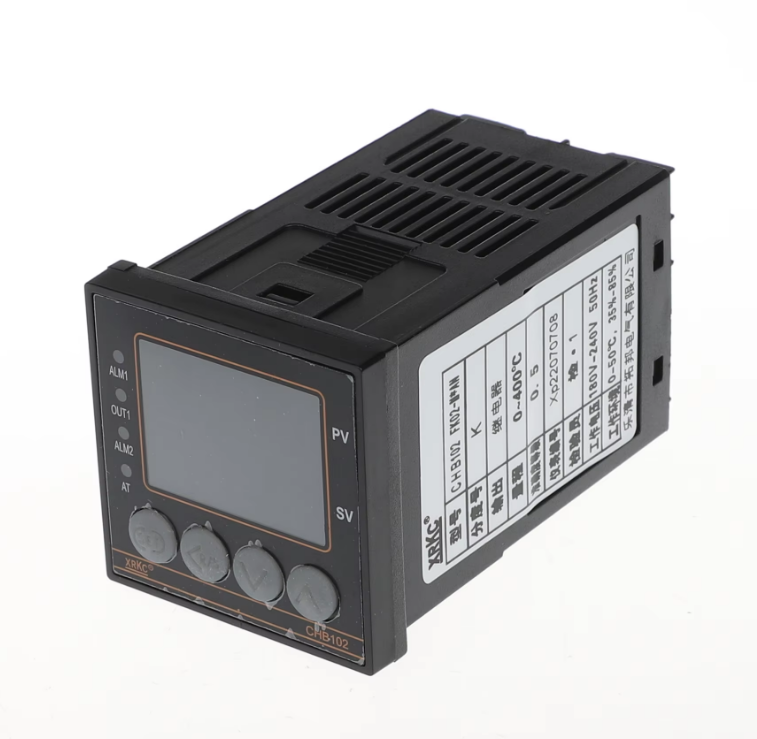
The Difference Between a Controller and a Good Controller
A PID temperature controller is only as effective as its tuning. The hardware might be state-of-the-art, the sensor might be freshly calibrated, and the actuator might be brand new—but if the proportional, integral, and derivative parameters are not set correctly, the system will oscillate, drift, or respond sluggishly. Tuning is the process of adjusting these parameters to match the controller to the specific dynamics of the process.
Get it right, and the temperature stays locked on setpoint through disturbances and setpoint changes. Get it wrong, and the controller becomes a source of problems rather than a solution. This is why tuning is not a one-time setup task—it is a core competency for anyone responsible for process control.
What Happens When Tuning Is Off
Poorly tuned PID controllers exhibit characteristic failure modes. Each one points to a different parameter issue.
Oscillation that never settles usually indicates too much proportional gain or too little integral time. The controller overreacts to error, swings past the setpoint, then overcorrects in the opposite direction. The result is a temperature trace that looks like a sine wave centered on the setpoint but never actually landing on it.
Slow response to disturbances suggests the opposite problem—too little proportional gain or too much integral time. The controller reacts so cautiously that temperature drifts for minutes before correction begins. In processes with tight tolerance requirements, that drift alone can ruin a batch.
Steady-state offset—the temperature consistently sitting a few degrees away from setpoint—points to insufficient integral action. The proportional term got the system close, but the integral term is not aggressive enough to eliminate the residual error.
Overshoot on startup, where the temperature shoots past the setpoint before settling, often indicates derivative action that is too weak or integral action that is too strong.
| Tuning Issue | Typical Symptom | Likely Cause |
|---|---|---|
| Oscillation | Temperature cycles around setpoint | Kp too high, Ti too low |
| Sluggish response | Slow reaction to disturbances | Kp too low, Ti too high |
| Steady-state offset | Constant deviation from setpoint | Integral action too weak |
| Excessive overshoot | Spikes past setpoint on startup | Derivative too weak or integral too strong |
A Case from the Field: The Oven That Would Not Behave
A Midwest-based food processor was running a continuous baking oven for crackers. The oven had four independent heating zones, each controlled by its own PID temperature controller. The problem was that zones two and three would not hold temperature. Every time the line speed changed—which happened several times a shift—zone two would overshoot by 15°F, and zone three would drop 10°F below setpoint before slowly recovering. The result was inconsistent browning and a rejection rate around 8%.
The plant's maintenance team had been adjusting the PID parameters by trial and error for months, with little improvement. A controls engineer finally ran a proper tuning exercise. He started by putting each loop in manual mode and introducing step changes to characterize the process response. Using the Ziegler-Nichols method, he calculated initial values for Kp, Ti, and Td. Then he fine-tuned based on actual production observations.
After tuning, both zones held temperature within ±2°F of setpoint through line speed changes. The rejection rate dropped below 2%. The fix did not require new hardware—just the right parameters entered into the existing controllers.
Classical Tuning Methods: Where to Start
Several established methods provide a systematic starting point for PID tuning. The Ziegler-Nichols method, developed in the 1940s, remains the most widely used. It can be applied in either open-loop or closed-loop mode. In the closed-loop version, the controller gain is increased until the system oscillates at a consistent amplitude. The ultimate gain (Ku) and ultimate period (Pu) are then used to calculate tuning parameters from a lookup table.
The Cohen-Coon method is another classical approach, typically used for open-loop systems. It involves introducing a step change in the control output and recording the process reaction curve. Parameters derived from that curve—process gain, dead time, and time constant—are then used to calculate PID settings. Studies have shown that the Cohen-Coon method can produce lower overshoot than Ziegler-Nichols in some applications, though it can become unstable under noisy conditions.
Both methods provide a reasonable starting point, but they are not final answers. Process dynamics change over time, and the "optimal" tuning for one set of operating conditions may not be optimal for another.
The Role of Autotune and When to Trust It
Many modern PID temperature controllers include autotune or self-tuning functions. These features automate the tuning process by running a test sequence, analyzing the process response, and calculating PID parameters. For plants without experienced control engineers on staff, autotune can be a valuable tool.
But autotune has limitations. It typically performs the test under one set of conditions—often at startup or during a specific production run. If the process dynamics change significantly with different products or operating points, the autotune results may not be optimal across the full operating range. Autotune is a starting point, not a substitute for ongoing performance monitoring and occasional manual refinement.
In practice, many experienced practitioners use autotune to get close, then make small manual adjustments based on real production data. The autotune gets the system into the ballpark; the human touch gets it into the zone.
Why Tuning Is Never Really "Done"
One of the most common misconceptions about PID control is that tuning is a one-time activity. It is not. Process dynamics drift over time. Heat exchangers foul. Sensors drift. Ambient conditions change. Product formulations evolve. All of these factors affect how the process responds to control action, which means the "optimal" tuning parameters change too.
Regular performance monitoring—watching temperature traces, tracking deviation from setpoint, noting how the system responds to disturbances—provides early warning that retuning is needed. Some plants schedule periodic tuning reviews as part of their preventive maintenance program. Others rely on continuous monitoring systems that flag performance degradation automatically.
The ISA TR5.9-2023 technical report from the International Society of Automation provides guidance on PID algorithm selection and performance measurement, offering a framework for evaluating whether a controller is performing as expected. For organizations serious about process control, that document is worth studying.
The Practical Takeaway
Tuning a PID temperature controller is not magic. It is a systematic process of matching controller behavior to process characteristics. The tools are well understood—Ziegler-Nichols, Cohen-Coon, trial and error, autotune. The challenge is applying them with discipline and recognizing that tuning is an ongoing responsibility, not a checkbox to tick during commissioning.
For manufacturers who lack in-house controls expertise, working with a supplier that understands both the hardware and the application context can make a significant difference. Companies like SST, with deep experience in temperature control manufacturing and application support, provide not just equipment but the knowledge to make it perform. Because in the end, a PID controller is only as good as its tuning—and good tuning comes from understanding both the math and the process.