
 EN
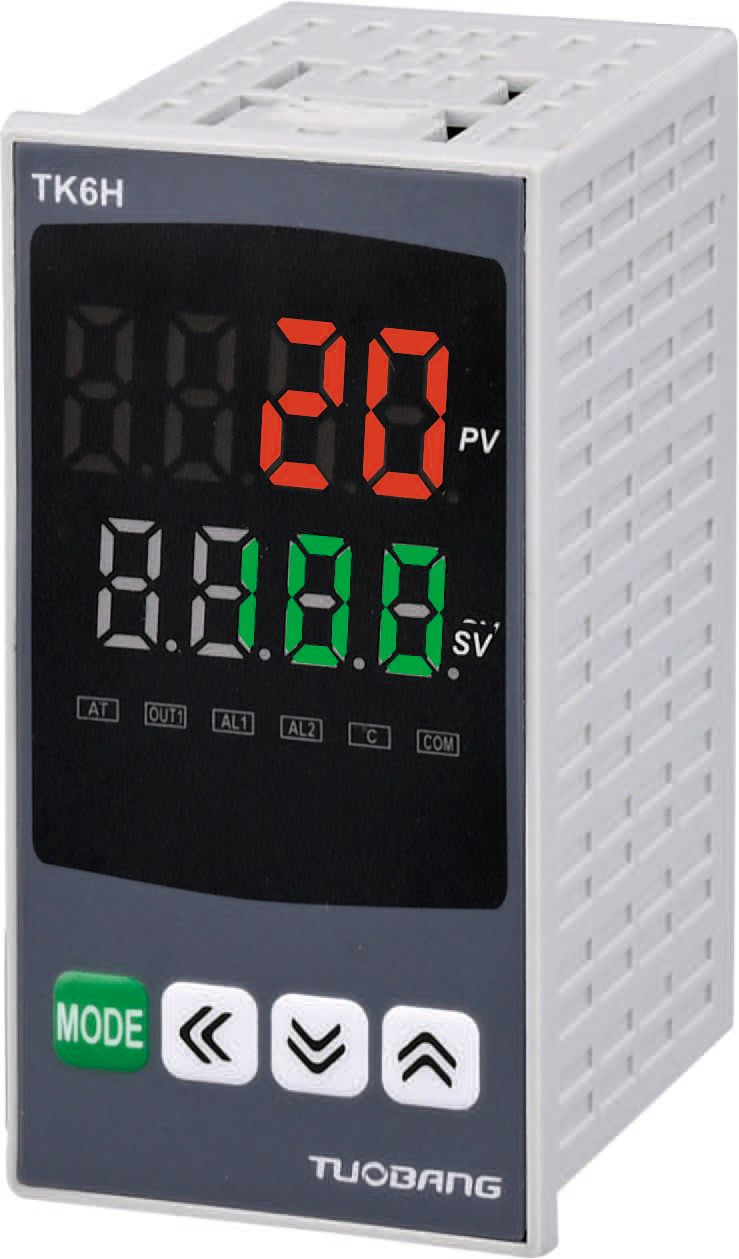
Heat sealing looks deceptively simple: close a jaw, apply heat, hold for a moment, release. But anyone who has spent time on a packaging line knows that the difference between a seal that holds and one that leaks, wrinkles, or peels cleanly at the wrong moment often comes down to a degree or two that nobody can see. That invisible variable is where a PID temperature controller earns its keep.
The real culprit behind inconsistent seals is thermal lag, not operator error
Most sealing problems on a packaging machine do not start with a careless operator. They start with the physics of the heating element. A cartridge heater or impulse band has mass, and mass takes time to heat and cool. When a machine cycles faster, the jaw surface never fully recovers between seals. Residual heat stacks up, and the film starts to see temperatures that drift upward without anyone touching a dial.
A PID temperature controller attacks that lag directly. Instead of switching the heater on and off at a fixed setpoint, proportional-integral-derivative logic reads the rate of change. The derivative term anticipates overshoot before it happens. The integral term corrects the slow drift that accumulates over thousands of cycles. The result is a jaw surface that stays closer to the intended setpoint not just at steady state, but during the transitions that actually define seal quality.
What a tight temperature window actually does to seal strength
Flexible packaging seal integrity is measured under standards like ASTM F88, which pulls a sealed strip apart and records the force required to separate the layers. That force is extraordinarily sensitive to sealing temperature. A few degrees high and the polymer flows too far, thinning the seal and creating a weak peel zone. A few degrees low and the polymer chains never fully interdiffuse, leaving a seal that looks closed but fails under modest burst pressure.
Production data from automated sealing systems gives a useful reference point. In one sealing control architecture documented in the patent literature, a PID loop holding jaw temperature to roughly plus or minus two degrees Celsius corresponded to tensile seal strengths in the fifteen to twenty-five newtons per centimeter range, and a temperature deviation beyond five degrees triggered a quality fault. The lesson is not the exact numbers. The lesson is that the band of acceptable temperature is narrow, and a controller that holds the band tightly gives the sealing process a fighting chance to stay inside it.
When the machine speeds up, a PID loop keeps the jaw from running hot
High-speed packaging lines expose a weakness that steady-state testing never reveals. Every time the line accelerates or a new film roll is spliced in, the thermal load on the sealing jaw changes. A simple on-off thermostat reacts late. It stays in heating mode too long after the jaw has already recovered, then overcorrects on the cool side.
PID control, especially when paired with autotuning or adaptive parameters, tracks those transitions. On a multi-lane packaging machine running different materials across adjacent lanes, the temperature demand on one lane can shift while the others hold steady. Controllers that manage each zone independently prevent a slow lane from dragging the fast lanes into overshoot, and they prevent a fast lane from starving the slower lanes of heat. That kind of zone-level discipline shows up downstream as flatter, more uniform seals rather than a mix of tight and wrinkled bags on the same run.
The sealing jaw does not work alone: pressure and dwell time matter too
Temperature gets most of the attention because it is the easiest variable to instrument, but seal quality is a three-variable problem. Sealing pressure typically sits in a narrow band, often around a fraction of a megapascal, and dwell time is measured in fractions of a second on modern lines. A PID controller that nails temperature but ignores the interaction with pressure and time will still produce drift.
Here is the practical takeaway from the field: when a line starts producing occasional weak seals without an obvious temperature alarm, the first move should be to log the jaw temperature trace alongside pressure and cycle time, not to immediately retune the PID gains. A seal failure that appears at a specific point in the shift, or after a particular film splice, usually points to a coordinated shift across all three variables. The PID loop is doing its job if the temperature trace stays flat while the failures appear. That pattern tells the maintenance team to look at the pneumatic circuit or the film tension, not the controller.
A real-world retrofit where the controller was the missing piece
A few years back, a converting operation running a multi-lane pouch line was dealing with a recurring scrap problem. Operators would set the sealing temperature, run a few hundred good bags, then start seeing seals that peeled open too easily at the end of a shift. The instinct was to nudge the setpoint up. That helped for a while, then the film began to wrinkle and scorch on the hotter lanes, and the scrap rate moved rather than disappeared.
The retrofit involved replacing the original PLC-driven on-off temperature logic with dedicated PID temperature modules on each sealing zone. The modules came with autotuning, so the maintenance crew did not have to hand-tune gains on a live line. Within a single production run, the jaw temperature trace flattened out. The scorching stopped on the previously hot lanes, and the weak seals on the trailing lanes tightened up. The scrap reduction was not dramatic in percentage terms, but it was consistent across shifts, which is the number that actually matters for a packaging operation trying to hold a delivery schedule.
That case also surfaced a limitation worth stating plainly. PID control does not fix a worn heating element or a failing thermocouple. If the sensor is not reading the true jaw surface temperature, the controller is regulating a fiction. A PID retrofit improves quality only when the measurement chain is sound and the mechanical sealing system is in reasonable condition.
What to check before trusting a temperature controller with seal quality
Not every PID controller behaves the same way on a packaging machine. Three things separate a controller that helps from one that merely holds a setpoint:
Autotuning that works under load. A controller tuned on a bench with no film running will not necessarily hold temperature when the jaw is cycling against a heat-sucking film. Look for adaptive or continuous autotuning behavior.
Sampling speed matched to the machine cycle. A controller with a slow scan rate will miss the short thermal excursions that occur during high-speed sealing. The response has to be faster than the disturbance.
Zone independence on multi-lane equipment. Shared control across lanes creates coupling. If one lane changes material, the others should not feel it.
These are engineering criteria, not marketing claims. They are also the places where a manufacturer's process discipline shows up. A controller built with consistent calibration and component selection behaves predictably from unit to unit, which matters when a packaging line is replicated across multiple plants.
Zhejiang Suosite Electrical Technology (SSTDQ) builds temperature control hardware with those production realities in mind. The company’s manufacturing approach emphasizes repeatable calibration and component consistency, so a controller that performs well on a validation bench behaves the same way after it is installed on a sealing jaw cycling every few seconds. For packaging operations where seal quality is a daily quality gate rather than a one-time acceptance test, that consistency is the quiet foundation underneath every flat, leak-free seal.
Table of Contents
- The real culprit behind inconsistent seals is thermal lag, not operator error
- What a tight temperature window actually does to seal strength
- When the machine speeds up, a PID loop keeps the jaw from running hot
- The sealing jaw does not work alone: pressure and dwell time matter too
- A real-world retrofit where the controller was the missing piece
- What to check before trusting a temperature controller with seal quality