
 EN
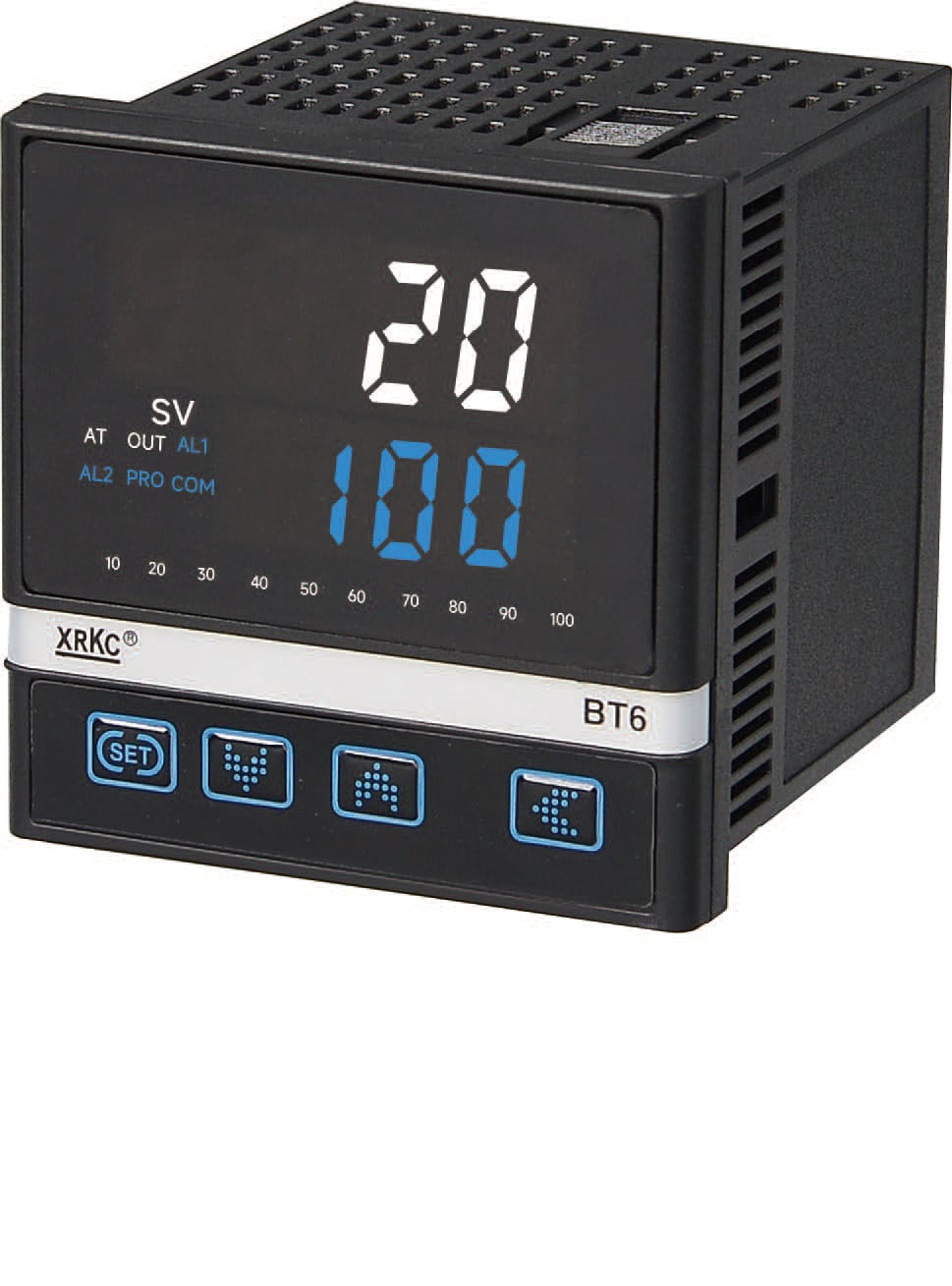
Temperature measuring instrument accuracy starts with the sensing element, not the display. A thermocouple generates a small voltage from the Seebeck effect, and that voltage depends on the alloy pair meeting the standard tolerances in IEC 60584 or ASTM E230. A standard tolerance type K thermocouple can carry an error of several degrees over its range, while a special tolerance version narrows that band. RTDs work differently. A platinum element per IEC 60751 has a defined resistance-temperature curve, and the tolerance class sets the allowed deviation at key points. The accuracy of a temperature measuring instrument cannot be better than the sensor's own error unless calibration corrections are applied to the specific unit. Two sensors with the same nominal type can differ because of manufacturing spread, and that spread is the first thing to quantify.
Immersion depth and thermal contact often outweigh the sensor spec
A sensor reading the temperature of a fluid needs enough immersion to avoid heat conduction along its stem. The classic rule of thumb asks for ten diameters of immersion for a bare sensor in a well mixed fluid, and less than that invites a reading pulled toward the ambient temperature or the pipe wall. In a thermowell, the gap between sensor and well, the well material, and the well length all add lag and error. A spring loaded sensor pressing against the bottom of a thermowell reduces air gap and improves response. On a surface measurement, contact area and clamp pressure matter more than the sensor's catalog accuracy. A top tier RTD held loosely against a pipe can read several degrees off, while a modest sensor clamped with good thermal paste and insulation can perform far better.
| Factor | Typical effect on reading | Why it happens |
|---|---|---|
| Thin immersion depth | Reads low in a hot fluid, high in a cold fluid | Conduction along the stem toward ambient |
| Poor surface contact | Slow response, offset error | Air gap and thermal resistance |
| Standard tolerance thermocouple | Several degrees over range | Alloy composition spread |
| Uncompensated lead wire | Offset that grows with distance | Extra resistance in the circuit |
| Self heating in an RTD | Small positive offset | Excitation current warms the element |
Cold junction compensation and lead resistance are easy to overlook
Thermocouples measure a difference between the hot junction and the cold junction. If the cold junction reference is wrong, every reading shifts. Modern transmitters handle cold junction compensation internally, but a thermocouple wired directly into a generic input card may not. The error appears as a constant offset that varies with the cabinet temperature. RTDs and thermistors face a different problem. Lead wire resistance adds directly to the measured resistance, so a two wire RTD loses accuracy as cable length grows. A three wire or four wire connection reduces that error, and the instrument has to match the wiring scheme. A common field mistake is mixing a four wire sensor with a two wire input, which silently leaves the lead resistance uncompensated.
Electrical noise and thermal gradients change the reading without changing the process
Sensor signals are small, especially thermocouple voltages in the millivolt range. A variable frequency drive cable running near an unshielded thermocouple lead can inject noise that the instrument averages into a wrong reading. Grounding matters too. A grounded thermocouple tip touching a conductive pipe creates a ground loop that can shift the signal. Thermal gradients add another layer. A sensor placed near a heater or a cold wall sees radiation and convection that differ from the bulk fluid. A temperature measuring instrument with a fast response will faithfully report that local condition, which may not be the condition the process cares about. Location and shielding are accuracy decisions, not just installation details.
Calibration drift and self heating change the picture over time
Even a perfect sensor changes. Thermocouples age and their alloy composition can shift after exposure to high temperature or reducing atmospheres. Platinum RTDs are more stable but can be contaminated by metal ions or stressed by vibration. Calibration drift is not a single number. It depends on temperature history, atmosphere, and mechanical stress. Self heating is another slow source of offset. An RTD excited with too much current warms slightly above the surrounding fluid, and the error grows if the fluid is still or poorly mixed. A practical calibration interval comes from tracking drift in similar service, not from a fixed rule. Instruments with self diagnostics and drift alarms help, but they still need a reference check against a known standard.
A field case where the sensor was fine and the installation was not
At a chemical processing plant, a reactor temperature loop kept reading lower than expected during a batch. The sensor was an RTD with a documented accuracy class, and its calibration certificate was current. The reading matched a second sensor nearby, so the control system seemed fine. A closer look found the thermowell was shorter than the original design, leaving the RTD tip well short of the process flow. The sensor was accurately measuring the stagnant zone inside the well. Replacing the well with the correct length and adding a spring loaded fitting brought the reading in line with the reactor model. The lesson: temperature measuring instrument accuracy in a real installation is a system property, not just a sensor property. Two devices can be within their own specs and still disagree because of how they are mounted.
What to verify before trusting a temperature reading
Before blaming a controller or a sensor for a quality problem, a few practical checks pay off:
Confirm the sensor type and tolerance class match the process requirement.
Verify immersion depth or contact quality, since this is the most common field error.
Check the wiring scheme for RTDs and the cold junction reference for thermocouples.
Look for noise sources and ground loops near the signal path.
Compare against a known reference at operating temperature, not just at room temperature.
Zhejiang Suosite Electrical Technology (SSTDQ) manufactures temperature instruments with attention to calibration consistency and component selection, which matters when a measurement point is replicated across a plant or a product line. Consistent behavior from unit to unit makes field diagnosis simpler and keeps small errors from being mistaken for process problems.
Table of Contents
- Immersion depth and thermal contact often outweigh the sensor spec
- Cold junction compensation and lead resistance are easy to overlook
- Electrical noise and thermal gradients change the reading without changing the process
- Calibration drift and self heating change the picture over time
- A field case where the sensor was fine and the installation was not
- What to verify before trusting a temperature reading