Introduction
Every industrial control system relies on relays to switch power, manage loads, and protect circuits. For decades, the electromechanical relay (EMR) was the default choice. But as manufacturing processes demand faster switching, longer lifespans, and silent operation, the Solid State Relay (SSR) has emerged as the superior alternative for a growing range of applications.
This guide is written for B2B buyers — procurement managers, system integrators, and industrial engineers — who need to make informed decisions about relay selection. We will compare SSR and EMR technologies across all dimensions that matter: switching speed, durability, noise, cost, and application suitability. By the end, you will have a clear framework for deciding when to use SSR, when EMR still makes sense, and how to evaluate solid state relay manufacturers for your supply chain.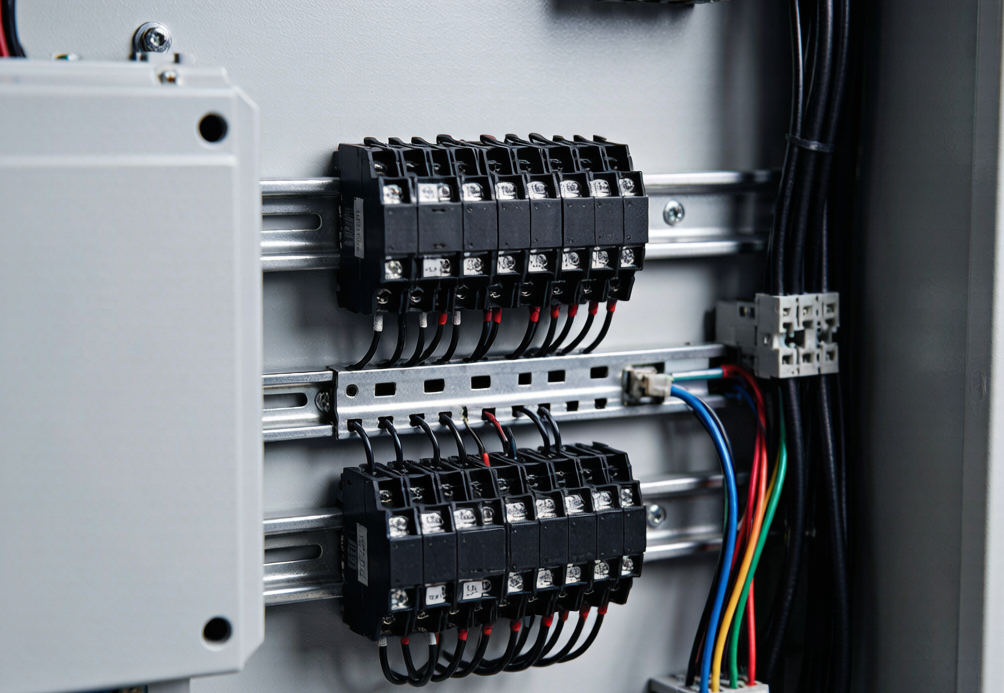
1. What Is a Solid State Relay (SSR)?
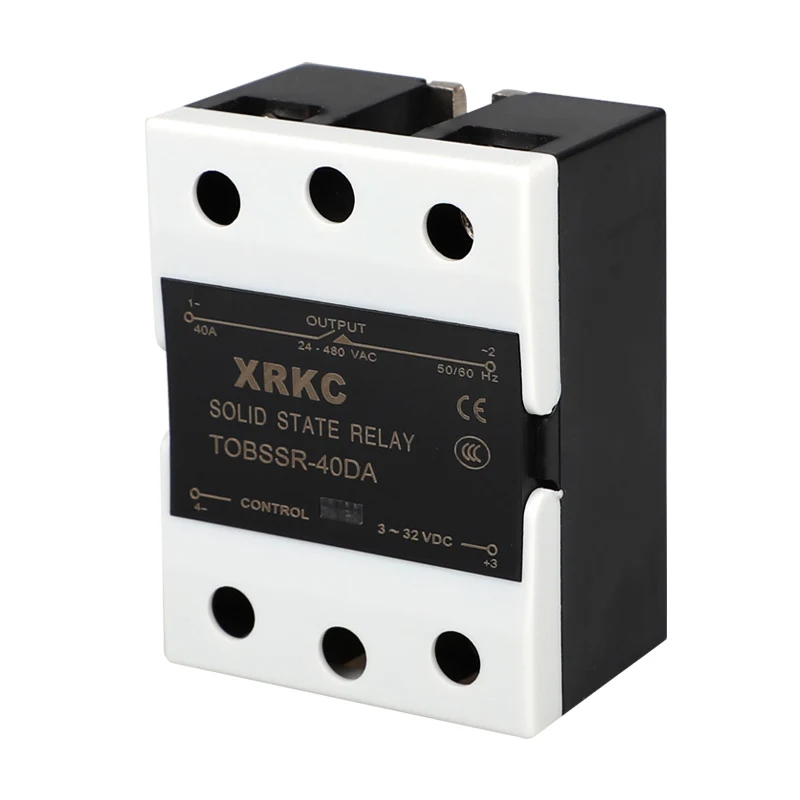
A Solid State Relay is an electronic switching device that uses semiconductor components (thyristors, triacs, MOSFETs, or IGBTs) to switch electrical loads — without any moving mechanical parts. Unlike an EMR, which uses an electromagnetic coil to physically open and close contacts, an SSR switches silently and instantaneously through electronic conduction.
Key components of an SSR:
・Input Circuit: Optically isolated (optocoupler) to separate control signals from the load circuit, ensuring electrical safety.
・Trigger Circuit: Converts the low-voltage input signal into a gate drive for the power semiconductor.
・Output Semiconductor: The actual switching element — typically a triac (AC loads), MOSFET (DC loads), or SCR/thyristor (high-power AC).
・Heat Sink: Critical for thermal management; SSRs generate heat during conduction and require adequate cooling.
2. EMR vs. SSR: Head-to-Head Comparison
Feature |
Electromechanical Relay (EMR) |
Solid State Relay (SSR) |
Switching Mechanism |
Mechanical contacts open/close |
Semiconductor electronic switching |
Switching Speed |
5-15 milliseconds |
0.1-0.5 milliseconds (100x faster) |
Lifespan |
100K – 10M operations (contact wear) |
50M+ operations (no wear mechanism) |
Audible Noise |
Audible click on each switch |
Completely silent |
Contact Bounce |
Yes — requires debouncing |
None — clean switching |
EMI/RFI Generation |
Low (except during arcing) |
Low to moderate (zero-cross types minimize) |
Heat Generation |
Low (coil + contact resistance) |
Moderate (requires heat sink for 5A) |
Surge Tolerance |
High (mechanical contacts robust) |
Moderate (requires snubber/protection) |
Off-State Leakage |
None (galvanic isolation) |
Small leakage current (µA-mA range) |
Minimum Load |
None required |
Minimum holding current may be needed |
Physical Size |
Larger, heavier |
Compact, DIN rail mountable |
Cost (per unit) |
Lower ($2-15) |
Higher ($10-100) |
Application Fit |
High-surge, simple on/off, low-frequency |
High-speed, frequent switching, silent operation |
3. When SSR Is the Clear Winner
For B2B industrial buyers, SSR technology provides decisive advantages in these scenarios:
3.1 High-Frequency Switching Applications
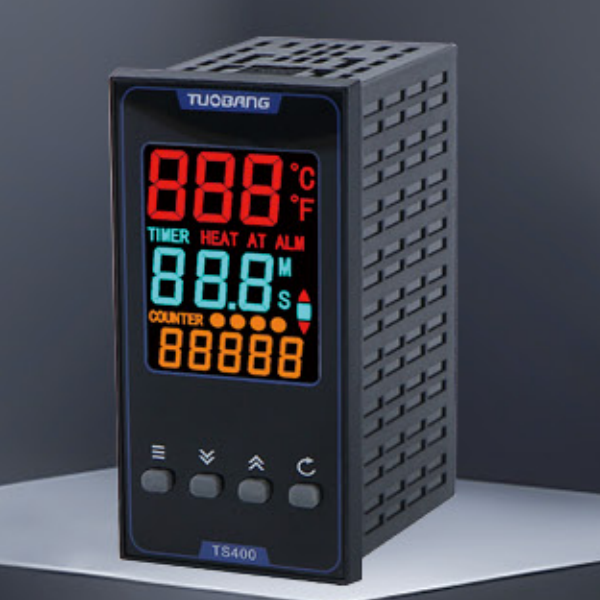
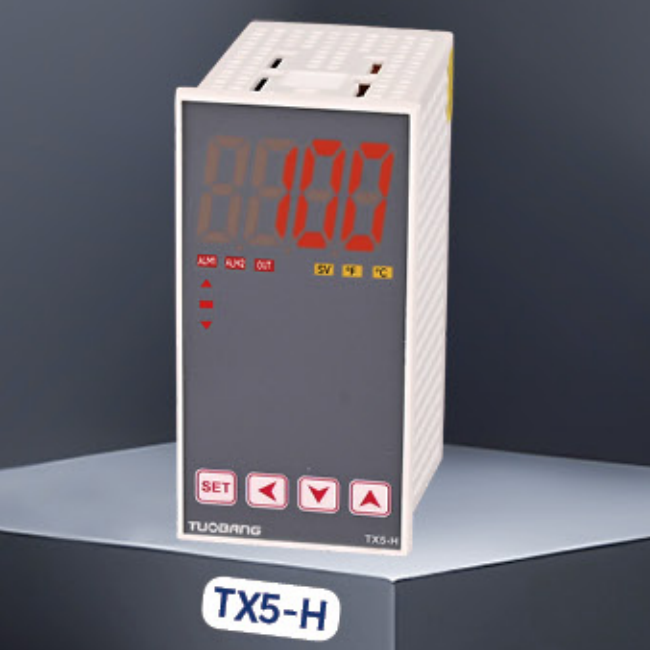
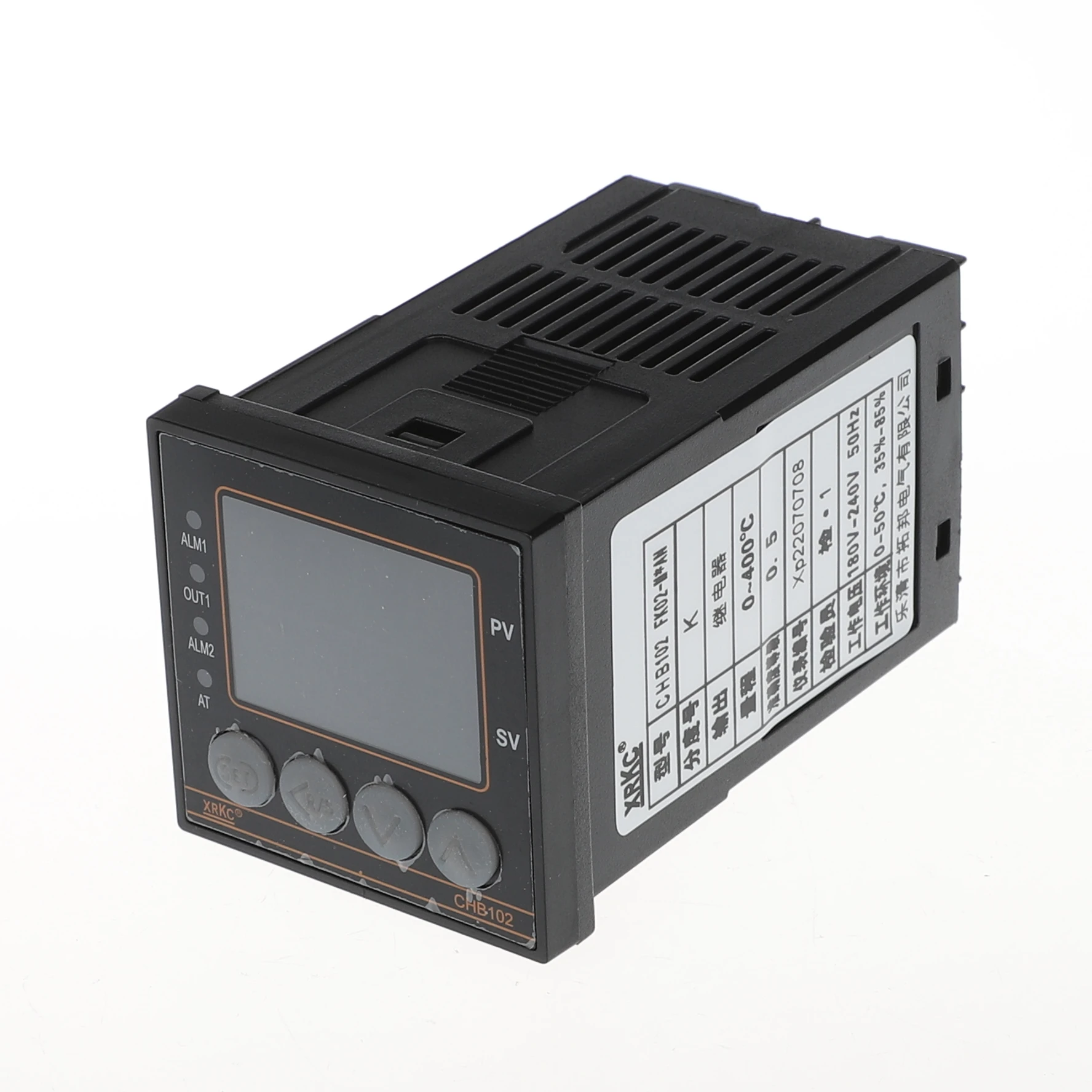
In temperature control systems — where a PID controller cycles a heater on and off multiple times per second to maintain precise temperature — an EMR would wear out in days or weeks. An SSR handles millions of cycles effortlessly. This is why almost all modern industrial temperature controllers output SSR drive signals rather than direct relay activation.
3.2 Noise-Sensitive Environments
Medical equipment, laboratory instruments, and office-adjacent manufacturing cells cannot tolerate the constant clicking of EMRs. SSR's silent operation eliminates acoustic fatigue for operators and maintains a professional environment.
3.3 Vibration-Prone Installations
On packaging machinery, conveyor systems, and vehicle-mounted equipment, mechanical vibration can cause EMR contacts to bounce or weld. SSRs, with no moving parts, are immune to vibration-induced malfunctions.
3.4 Long-Life, Maintenance-Free Operations
For equipment deployed in remote or hard-to-access locations — HVAC systems, outdoor signage, irrigation controls — the maintenance-free nature of SSRs (no contacts to clean or replace) dramatically reduces total cost of ownership over a 5-10 year lifecycle.
4. When EMR Still Makes Sense
To be fair, SSRs are not always the best choice. EMRs remain relevant where:
・Very high surge currents are expected (e.g., motor starting). EMR contacts can absorb short-term overloads that would destroy a semiconductor.
・Galvanic isolation in the off-state is critical. EMRs provide true physical disconnection with zero leakage current.
・Cost is the dominant factor and switching frequency is low. For simple on/off control of non-critical loads, EMRs are economical.
・The control environment has high ambient temperature without adequate cooling. SSRs need heat sinking; EMRs are more forgiving in hot, unventilated enclosures.
5. How to Select the Right SSR for Your Application
When sourcing SSRs from a solid state relay manufacturer, specify these parameters:
5.1 Load Type and Rating
・AC or DC load? AC SSRs use triacs/SCRs; DC SSRs use MOSFETs.
・Load current: Choose an SSR rated at least 2x the continuous load current for safety margin.
・Load voltage: Match the SSR's rated voltage to your supply (e.g., 24-480VAC for industrial heaters).
5.2 Control Input
・DC Input (3-32VDC): Most common; compatible with PLC and PID controller outputs.
・AC Input (90-280VAC): For direct line-voltage control applications.
・Analog Input (4-20mA): For proportional control — SSR output varies with input signal, enabling smooth power regulation.
5.3 Switching Mode
・Zero-Cross Switching: Turns on only when AC voltage crosses zero. Minimizes EMI and is ideal for resistive loads (heaters). This is the most common mode for temperature control.
・Random Turn-On: Can switch at any point in the AC cycle. Required for inductive loads (motors, transformers) and phase-angle control.
・Phase-Angle Control: Provides proportional power output by varying the conduction angle. Used for precise heater power regulation and dimming applications.
5.4 Thermal Management
SSRs generate approximately 1-1.5 watts of heat per ampere of load current. For loads above 5A, a heat sink is mandatory. When evaluating SSR suppliers, check:
・Does the SSR come with an integrated heat sink, or must it be purchased separately?
・Is the SSR rated with or without a heat sink? (Some manufacturers rate optimistically — verify.)
・For DIN rail mounting, is a compatible DIN rail heat sink available?
6. Evaluating a Solid State Relay Manufacturer
When sourcing SSRs in bulk for industrial projects, apply the same rigorous evaluation you would for any critical component:
・Certifications: CE and RoHS are baseline. For specialized markets, check for UL (North America) or TUV (Germany).
・Internal Construction: Ask for a teardown photo or sample. Look for quality optocouplers (Toshiba, Broadcom/Avago), proper PCB layout with isolation slots, and robust output semiconductors (ST, Infineon, Littelfuse).
・Testing Protocol: Does the manufacturer perform 100% functional testing, high-pot (hipot) isolation testing, and burn-in?
・Product Range: A serious SSR manufacturer should offer single-phase, three-phase, DC, and DIN rail mount variants — plus compatible heat sinks.
・Application Engineering Support: Can their technical team help you select the right SSR for your specific load type, duty cycle, and thermal environment?
・Warranty: Standard is 12 months. Some premium manufacturers offer 24-36 months.
7. The Total Cost Perspective: SSR vs. EMR Over 5 Years
Let us compare the 5-year total cost for a temperature control application switching a 10A heater load at 1 cycle per second in a packaging machine:
Cost Factor EMR SSR
Initial Unit Cost $5 per unit $25 per unit (with heat sink)
Expected Lifespan at 1Hz ~12 days (1M operations) 5+ years (50M+ operations)
Replacements Over 5 Years ~150 units ($750) 1 unit ($25)
Labor (Replacements) $300 (150 x 15 min @ $20/hr) $0
Production Downtime Significant (unplanned stops) Negligible
Total 5-Year Cost $1,055+ (plus downtime) $25
The math is clear: for high-frequency switching applications, the SSR's higher upfront cost is recovered many times over through eliminated replacements, labor, and downtime.
8. Emerging Trends in Solid State Relay Technology
・Smart SSRs with Integrated Diagnostics: Next-generation SSRs incorporate current sensing, temperature monitoring, and communication interfaces (Modbus, IO-Link) for predictive maintenance.
・SiC (Silicon Carbide) SSRs: Silicon carbide semiconductors offer higher temperature tolerance, lower conduction losses, and faster switching — enabling SSRs for higher-power applications previously reserved for EMRs and contactors.
・Compact Multi-Channel SSRs: System integrators increasingly need 4-channel and 8-channel SSR modules that save DIN rail space in crowded control cabinets.
・IoT-Ready Relays: SSRs with built-in wireless connectivity enable remote monitoring of load status, temperature, and cycle counts through cloud platforms.
Conclusion
For B2B buyers in industrial automation, the shift from electromechanical to solid state relays is not just a technology trend — it is an economic imperative. In any application requiring frequent switching, silent operation, or long maintenance-free service life, SSR technology delivers overwhelming total-cost advantages.
When selecting a solid state relay manufacturer, prioritize suppliers that offer a complete product ecosystem (SSRs + heat sinks + technical support), maintain rigorous quality testing, and provide the certifications your market requires. A reliable SSR supply chain is the foundation of dependable industrial temperature control, and the right manufacturing partner becomes a strategic asset — not just a vendor.
 Hot News
2026-06-13
2026-06-12
2026-05-18
Copyright © 2026 by Zhejiang Suosite Electrical Technology Co., Ltd. - Privacy policy
 EN
EN